


WHY WEBSITE DESIGN UNITED STATES MATTERS FOR YOUR BUSINESS
Website design United States is a booming industry with over 24,000 firms competing to help businesses succeed online. If you’re looking for a web design agency, here’s what you need to know:
QUICK ANSWER: FINDING THE RIGHT US WEB DESIGN PARTNER
- INDUSTRY SIZE: 24,078 web design firms operate in the US
- TYPICAL COSTS: $1,000 to $50,000+ depending on project scope
- HOURLY RATES: $50 to $300+ per hour
- KEY SERVICES: Web design, web development, SEO, digital strategy
- WHAT TO LOOK FOR: Strong portfolios, verified client reviews (4.8-5.0 stars), proven expertise in your industry
Your website isn’t just a digital brochure. It’s the centerpiece of your brand and sales strategy. In fact, 87% of businesses see an increase in website visits after implementing professional web design combined with SEO.
The US web design landscape has evolved dramatically. Gone are the days when a simple static website was enough. Today’s successful websites must balance beautiful design with technical excellence. They need to load fast, work flawlessly on mobile devices, rank well in search engines, and guide visitors toward taking action.
But here’s the challenge: not all web design agencies are created equal. Some focus purely on aesthetics while ignoring SEO. Others build technically sound sites that lack visual appeal. The best agencies understand that modern website design United States requires both art and science working together.
This guide will walk you through everything you need to know. You’ll find the latest design trends shaping the industry. You’ll learn what makes a website truly effective. And you’ll get an inside look at the top agencies delivering results for businesses across America.
I’m Magee Clegg, founder and CEO of Cleartail Marketing, where we’ve helped 90+ B2B companies grow through strategic website design United States projects that combine WordPress expertise with comprehensive digital marketing. Since 2014, our team has increased client website traffic by over 14,000% and delivered measurable ROI through conversion-focused design.
Let’s explore what makes great web design work and how to choose the right partner for your business.
Hottest Trends in US Website Design
The digital world never stands still, and neither does website design United States. What was cutting-edge yesterday might be outdated tomorrow. Keeping a pulse on the latest trends isn’t just about looking cool; it’s about staying relevant, engaging your audience, and ultimately, driving growth. We’ve noticed several significant shifts shaping the current landscape.
One of the most exciting developments is the rise of AI-powered design and AI content generation. Imagine a website builder that not only helps you choose a template but also assists in crafting a unique, personalized site custom to your brand, using “Design Intelligence” and even automatically drafting your website copy. This isn’t science fiction; it’s happening now, making bespoke website experiences more accessible than ever. Agencies like eDesign Interactive are already integrating AI capabilities into their projects to create custom experiences.
The mobile-first approach has matured from a good idea into a non-negotiable standard. With Google’s mobile-first indexing, if your site doesn’t perform flawlessly on a smartphone, it might as well not exist. This drives the need for truly responsive design, ensuring cross-device consistency and a seamless user experience whether someone is browsing on a desktop, tablet, or phone.
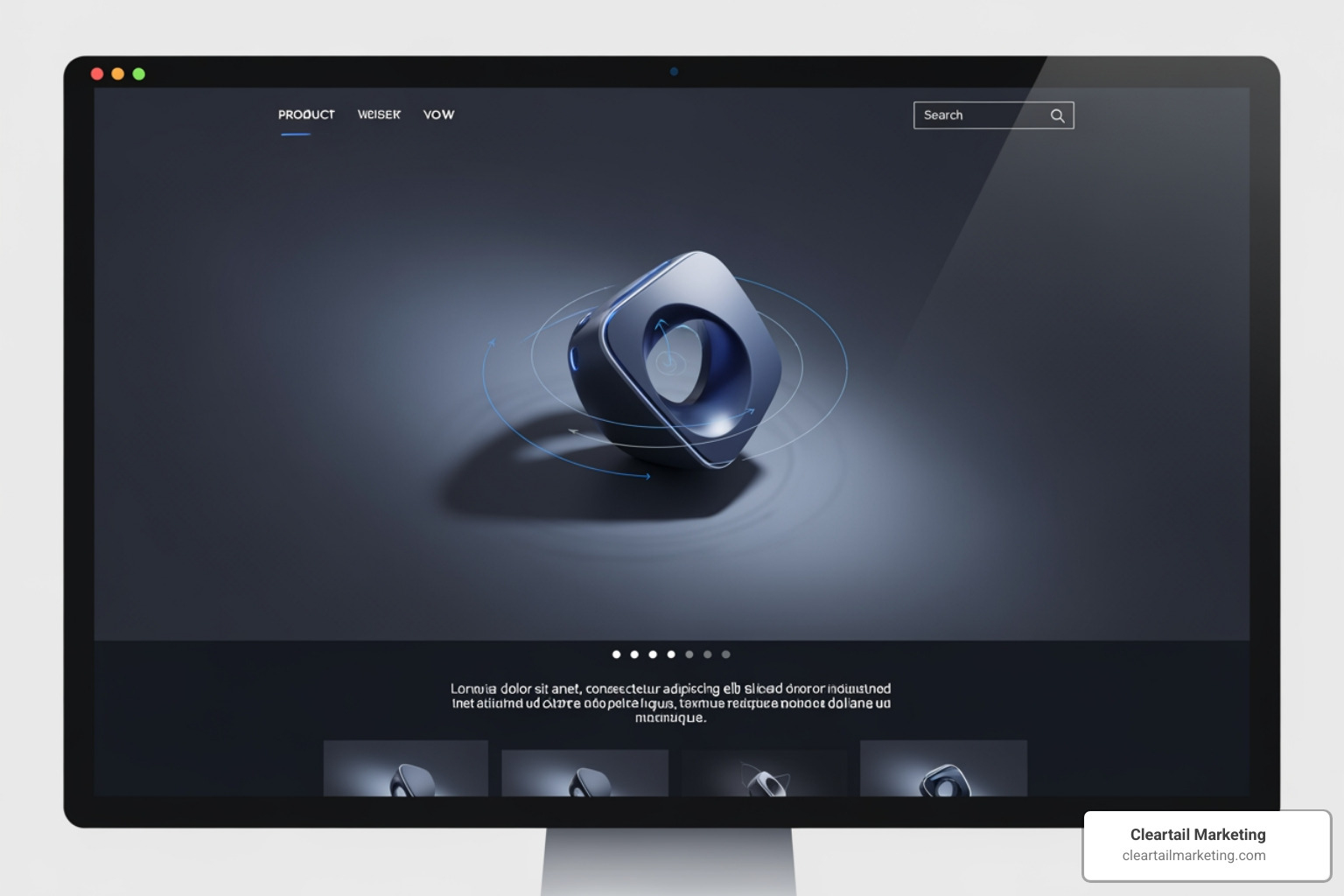
Visually, we’re seeing a push towards minimalism, cleaner interfaces, and the strategic use of dark mode for improved readability and reduced eye strain. But don’t mistake minimalism for boring! Designers are also incorporating captivating 3D elements and dynamic motion graphics to add depth, engagement, and a touch of personality. Think about how 3D animations and interactive elements can make a product pop or tell a story in a way static images simply can’t.
The Rise of AI in Web Development and SEO
If you’ve been paying attention to the digital world, you’ve undoubtedly noticed the buzz around AI. What was once relegated to futuristic movies is now fundamentally changing how we approach website design United States and, more importantly, how people find information online. We’re witnessing a significant shift in search behavior, moving from traditional Google searches to AI tools like ChatGPT and Google AI Overviews.
These AI platforms don’t just list links; they pull answers directly from structured content, presenting them in seconds. This means that if your brand isn’t optimized for AI search, it risks being entirely overlooked. AI SEO is the new frontier, focusing on structuring your content using signals that AI engines rely on to recognize authority. The goal? To get your brand featured prominently in AI-generated answers, influencing buying decisions and shaping brand choices. It’s no longer enough to rank high in traditional search results; we need to ensure your brand has visibility where AI is providing the answers. You can learn more about this crucial shift with these Insights on AI SEO strategy.
Why Mobile-First is a Non-Negotiable Strategy
Let’s face it: our phones are practically glued to our hands. So it’s no surprise that more users access websites from mobile devices than ever before. This isn’t just a preference; it’s a fundamental change in how people interact with the internet. For businesses in the US, this means a mobile-first approach to website design isn’t just a good idea—it’s absolutely essential.
Google cemented this necessity with its mobile-first indexing policy. This means Google primarily uses the mobile version of your content for indexing and ranking. If your mobile site is clunky, slow, or difficult to steer, your search rankings will suffer. A truly mobile-first strategy ensures a seamless mobile user experience (UX), with responsive design that automatically adapts to any screen size. We design websites that are visually appealing and functionally robust on every device, guaranteeing that your audience can engage with your brand anytime, anywhere.
Building for Success: Essential Elements of a High-Converting Website
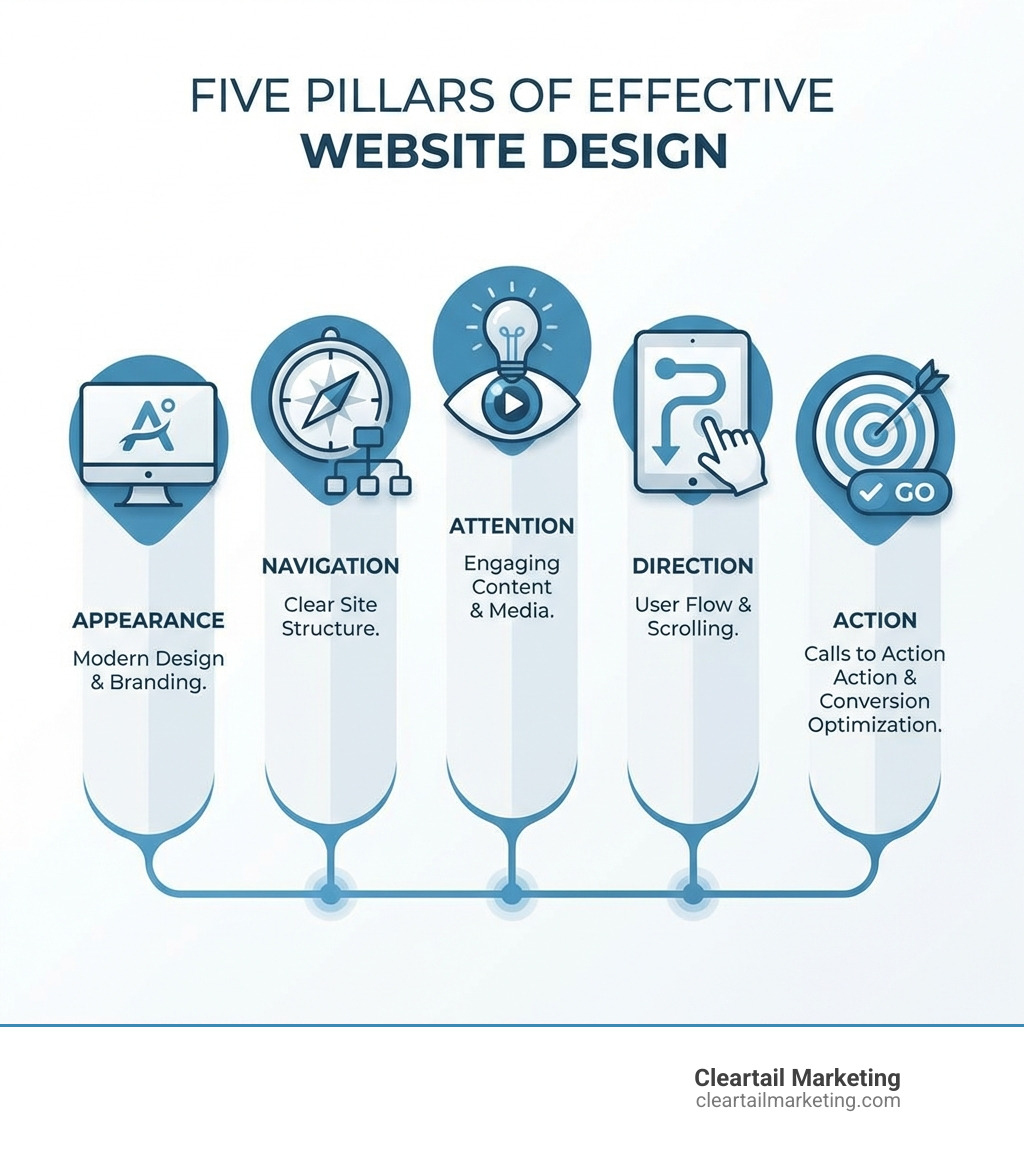
A beautiful website is nice, but a high-converting website is what truly drives business. In the competitive landscape of website design United States, we understand that your site needs to do more than just look good; it needs to perform. This means focusing on core elements that guide visitors, engage them, and encourage them to take action.
At the heart of a high-converting website lies an exceptional User Experience (UX) and a relentless pursuit of Conversion Rate Optimization (CRO). Our goal is to make every visitor’s journey on your site intuitive and enjoyable, leading them smoothly towards your business goals, whether that’s a purchase, a contact form submission, or a download. We start by defining those specific goals—are we making sales, driving inquiries, or educating an audience?
Strategic navigation is paramount. Think of it as your visitor’s GPS. Elements like breadcrumb navigation help users track their path and easily return to previous pages, which is especially useful for e-commerce or lead generation sites with deep content. For sites with extensive information, mega menus can effectively organize and present many links without overwhelming the user. And for our mobile users, the classic hamburger menu provides a clean, simplified way to access navigation without cluttering small screens.
Engaging content is another pillar. Text can be informative, but video marketing can summarize complex ideas and keep users enthralled. High-quality infographics are fantastic for breaking down data and attracting attention. We want to hold your audience’s attention and provide value.
Finally, clear Calls-to-Action (CTAs) are the signposts that guide your user journey. These aren’t just “click here” buttons; they are strategic invitations to take the next step. Studies show that well-placed CTAs dramatically increase conversions. Whether it’s “Get a Free Quote” or “Download Our Ebook,” every page should have a purpose and a clear path for visitors to follow.

The Importance of SEO in Website Design for United States Businesses
In the busy digital market of the United States, simply having a website isn’t enough. To be found by your target audience, your website needs to be optimized for search engines. This is where the seamless integration of SEO into website design United States becomes critical. We believe that web design and SEO are like peanut butter and jelly—they’re just better together!
Our approach starts with technical SEO, ensuring your site’s foundation is rock-solid. This includes optimizing site speed (a huge factor for Google’s Core Web Vitals), using semantic HTML for better content structure, and ensuring secure (HTTPS) and accessible websites. We also focus on image optimization, using correct formats and compression without losing quality, and implementing clean, readable URL structures that benefit both users and search engines.
Beyond the technical aspects, on-page optimization is key. This involves crafting high-quality, keyword-rich content that resonates with your audience and signals authority to search engines. We implement a smart keyword strategy that targets relevant terms, and for businesses serving specific areas, local SEO for US businesses ensures you appear in local search results when customers are looking for services near them. Our content strategy is designed to fill your site with valuable information, making it a go-to resource that builds trust and drives organic traffic.
The Critical Role of Accessibility
In the United States, website accessibility isn’t just a moral imperative; it’s often a legal requirement. The Americans with Disabilities Act (ADA) extends to the digital field, meaning websites must be accessible to individuals with disabilities. For us, inclusive design isn’t an afterthought; it’s a foundational principle of website design United States.
Adhering to Web Content Accessibility Guidelines (WCAG) ensures that your website can be steerd and understood by everyone, regardless of their abilities or the assistive technologies they use. This includes features like proper alt text for images, keyboard navigation, clear color contrast, and captions for videos. Beyond legal compliance, an accessible website broadens your audience, improves user experience for all, and can even boost your SEO. Search engines favor accessible sites because they offer a better experience overall.
The US government sets a high standard for accessibility. Official .gov websites, like the U.S. Department of Veterans Affairs and vote.gov, are prime examples of accessible design, built with systems like the U.S. Web Design System (USWDS) to ensure they are easy to use for all citizens. We can take a page from their book, ensuring your business website is not only compliant but genuinely welcoming to every visitor. You can find more information on government accessibility standards at the GSA accessibility statement.
Top Website Design United States Agencies and What Makes Them Stand Out
Choosing the right partner for your website design United States project can feel like finding a needle in a haystack, especially with over 24,000 firms out there. But it’s a decision that can make or break your online success. We recommend a thorough vetting process to ensure you’re partnering with an agency that truly understands your vision and can deliver measurable results.
When evaluating agencies, start by reviewing their portfolios. Do they have experience in your industry? Do their past projects align with your aesthetic and functional goals? Equally important are client reviews and ratings. Sites like Clutch.co provide invaluable insights, often showing average review ratings between 4.8 to 5.0 stars for top companies. Don’t just look at the star count; read the testimonials. What do clients say about communication, professionalism, and, most importantly, results?
Key differentiators often include an agency’s specializations—some excel in e-commerce, others in B2B lead generation, or perhaps a niche industry. Look for proven results, not just promises. The best agencies will have case studies and client testimonials that speak to increased traffic, higher conversion rates, and significant ROI.
Leading US Web Design Firms
Here are some of the standout agencies in the website design United States landscape, each bringing unique strengths to the table:
- Cleartail Marketing: That’s us! We specialize in WordPress website design and development, integrating it seamlessly with comprehensive digital marketing strategies. Our unique selling proposition lies in our experience, proven results, and dedication to building strong client relationships. We focus on creating high-performing, conversion-driven websites that serve as powerful digital marketing partners for businesses in the US and Canada. We’re not just building websites; we’re building pipelines. View Cleartail Marketing’s portfolio to see how we transform businesses online.
- UPQODE: Consistently earning high ratings on Clutch with a 4.9-star average from 69 reviews, UPQODE stands out for its strong focus on UI/UX design and branding. They aim to deliver visually appealing and user-friendly interfaces that resonate with audiences.
- eDesign Interactive: Known for creating “connected digital experiences,” eDesign Interactive is an award-winning agency that blends creativity with strategic insight. They excel in brand storytelling, motion graphics, and are actively integrating AI capabilities into their designs to transform generic websites into “living, brand platforms.”
- Americaneagle.com: With over 25 years of experience, Americaneagle.com offers a holistic approach to digital solutions. They pride themselves on being platform-agnostic, meaning they recommend the best technology for each client’s specific needs rather than being tied to one system. They serve a wide range of clients, from startups to Fortune 500 companies, emphasizing web development, experience design, digital marketing, and even AI consulting.
Your Project Roadmap: Costs, Challenges, and Strategies
Starting on a new website design or redesign project can be an exciting journey, but it’s not without its bumps in the road. In the field of website design United States, we’ve seen common challenges emerge time and again, and we’ve honed strategies to steer them effectively.
One of the most frequent challenges we encounter is dealing with outdated technology. Many businesses find their existing websites are “clogging up their pipeline” because they’re built on old platforms that are slow, insecure, or simply can’t keep up with modern demands. Another hurdle is unclear goals. Without a clear understanding of what the website needs to achieve—be it sales, leads, or brand awareness—the design process can drift aimlessly. Of course, budget limitations are always a consideration; everyone wants a champagne website on a beer budget!
To overcome these, we advocate for effective strategies that begin long before a single line of code is written. A comprehensive findy phase is crucial. This involves stakeholder interviews to align everyone’s vision, thorough competitor analysis to understand the market, and defining precise business goals and technical requirements. This upfront work ensures that the website we build is not just beautiful but strategically designed to meet your objectives. Finally, rigorous QA testing before launch is non-negotiable, ensuring a “bulletproof” site that works and looks great.
Budgeting for Website Design in the United States
Let’s talk numbers. The cost of website design United States can vary dramatically, much like buying a car—you can get a reliable sedan or a luxury sports car, and both will get you to your destination, but the experience and features will differ.
Several factors influence the final price tag. The project scope is perhaps the biggest determinant: a simple 5-page informational site will cost significantly less than a complex e-commerce platform with custom integrations. The choice between a custom design and a template-based solution also plays a huge role; custom work offers unique branding and functionality but comes at a higher price. The size and location of the agency can affect costs too.
Based on industry statistics, you can expect average hourly rates for web designers in the United States to range from $50 to $300+ per hour. For entire projects, the average client budget for web design projects in the United States typically falls between $1,000 to $50,000+. For smaller sites (1-10 pages), costs might be $1,000-$2,000, while larger, more complicated sites can easily exceed $10,000. Features like responsive design, e-commerce functionality, and CMS integrations can each add thousands to the total. It’s an investment, but a well-designed website offers significant ROI.
The Website Redesign Process
So, your current website is outdated, chasing away traffic, or just a poor reflection of your brand. When is it time for a redesign? Often, it’s when your site is no longer serving your business goals, failing to convert visitors, or simply looks like it’s “straight out of the ’90s.”
Our redesign process focuses on revitalizing your online presence while maintaining your digital assets. A critical step is content migration, ensuring all your valuable existing content is smoothly transferred to the new platform. Sometimes, a redesign also involves replatforming—moving from one content management system (CMS) to another (like from an older system to WordPress, our forte).
Throughout this process, we prioritize maintaining SEO equity. We conduct a thorough SEO audit before, during, and after the redesign to prevent any drops in search rankings. This means preserving existing backlinks, optimizing new URLs, and ensuring all redirects are correctly implemented. Our goal is to launch a fresh, modern site that not only looks fantastic but also builds upon your existing search authority, setting you up for long-term growth.
Frequently Asked Questions about US Web Design
We get a lot of questions about website design United States. Here are some of the most common ones we hear, along with our expert answers.
How much does web design cost in the United States?
The cost of web design in the United States can vary significantly, ranging from approximately $1,000 for a basic, smaller site to well over $50,000 for complex, custom-built platforms. Hourly rates for web designers typically fall between $50 and $300+.
Several factors influence this range:
- Project Scope: The number of pages, features, and overall complexity.
- Customization: A completely custom design will cost more than using a template.
- Integrations: E-commerce functionality, third-party software integrations, and custom database connections add to the cost.
- Responsive Design: Ensuring your site works perfectly on all devices is standard but requires extra development time.
- Agency vs. Freelancer: Larger agencies often have higher overheads but offer comprehensive teams and services.
The investment depends on your specific needs and business goals.
Why should I hire a professional web design agency?
Hiring a professional web design agency, like us at Cleartail Marketing, offers numerous benefits that go beyond just a pretty website:
- Expertise: We bring a team of designers, developers, and SEO specialists who are experts in their fields, ensuring a high-quality, functional, and optimized website.
- Proven Results: Agencies have a track record of success, often with testimonials and case studies demonstrating increased traffic, leads, and sales for clients.
- Efficiency: We have established processes to deliver projects promptly and within budget.
- Integrated Strategy: A good agency understands that web design is part of a larger digital marketing strategy, integrating SEO, UX, and conversion optimization from the start.
- Post-Launch Support: Many agencies offer ongoing maintenance, updates, and strategic guidance to keep your site performing optimally.
- Business Understanding: We take the time to understand your business and goals, ensuring the website is a true reflection of your brand and a tool for growth.
What is the role of accessibility in US web design?
Accessibility in website design United States plays a critical and multifaceted role:
- Legal Requirement: Under the Americans with Disabilities Act (ADA), websites must be accessible to individuals with disabilities, making it a legal obligation for many businesses.
- Wider Audience Reach: An accessible website ensures that everyone, including those with visual, auditory, cognitive, or motor impairments, can access and interact with your content. This significantly expands your potential customer base.
- Improved User Experience (UX): Accessibility features often benefit all users, leading to a better overall user experience. For example, clear navigation and good color contrast help everyone.
- Improved SEO: Search engines favor accessible websites because they are generally well-structured, easy to crawl, and provide a better experience for a broader audience, which can positively impact your search rankings.
- Government Standards: Official US government websites, such as the U.S. Department of Veterans Affairs, adhere to strict accessibility guidelines, setting an example for all digital presences in the country.
Ignoring accessibility is not just bad business; it can open your organization to legal risks and alienate a significant portion of your potential market.
Conclusion: Building Your Digital Future
Navigating the dynamic world of website design United States requires a strategic approach, an understanding of current trends, and a commitment to excellence. We’ve explored how crucial elements like AI-powered design, a mobile-first approach, robust SEO integration, and unwavering accessibility standards are for any business aiming to thrive online. Your website isn’t just a presence; it’s your strongest digital tool, a 24/7 salesperson, and the ultimate reflection of your brand.
At Cleartail Marketing, we pride ourselves on being more than just a web design agency; we’re your dedicated digital marketing partner. With our expertise in WordPress website design and development, we craft high-performing, conversion-driven websites that not only look fantastic but also deliver tangible results. We understand the nuances of the US market and are committed to building strong client relationships, ensuring your website works harder for you, for years to come.
Don’t let your website clog up your pipeline or be a poor reflection of your brand. It’s time to invest in a digital future that drives growth and connects meaningfully with your audience.
Start building your high-performing website with our design team today!
