



WHY YOUR SMALL BUSINESS WEBSITE MATTERS MORE THAN EVER
WEBSITE DESIGN FOR SMALL BUSINESS IS THE FOUNDATION OF YOUR DIGITAL SUCCESS. IN TODAY’S ONLINE-FIRST WORLD, YOUR WEBSITE IS YOUR 24/7 DIGITAL STOREFRONT—OFTEN THE FIRST PLACE POTENTIAL CUSTOMERS ENCOUNTER YOUR BRAND, SO IT NEEDS TO MAKE AN INSTANT IMPACT.
Quick answer: Effective small business website design includes:
- Clear navigation that helps visitors find what they need instantly
- Mobile-responsive design that works perfectly on all devices
- Fast load times (users form opinions in just 50 milliseconds)
- Professional branding with consistent colors, fonts, and imagery
- Strong calls-to-action that guide visitors to take the next step
- SEO optimization so customers can actually find you online
- Accessible design that works for all users
The stakes are high: 75% of consumers judge a company’s credibility based on its website design. A poorly designed site doesn’t just look bad—it costs you business. Conversely, a professional website can increase conversion rates by up to 200%.
The good news? Creating an effective website doesn’t have to be overwhelming or expensive. Whether starting from scratch or redesigning, understanding web design fundamentals helps you make smart decisions that drive real results.
I’m Magee Clegg, founder of Cleartail Marketing. Since 2014, we’ve helped over 90 B2B companies grow their online presence with strategic website design and digital marketing. Our conversion-focused approach has helped clients increase website traffic by over 14,000% and generate measurable ROI.
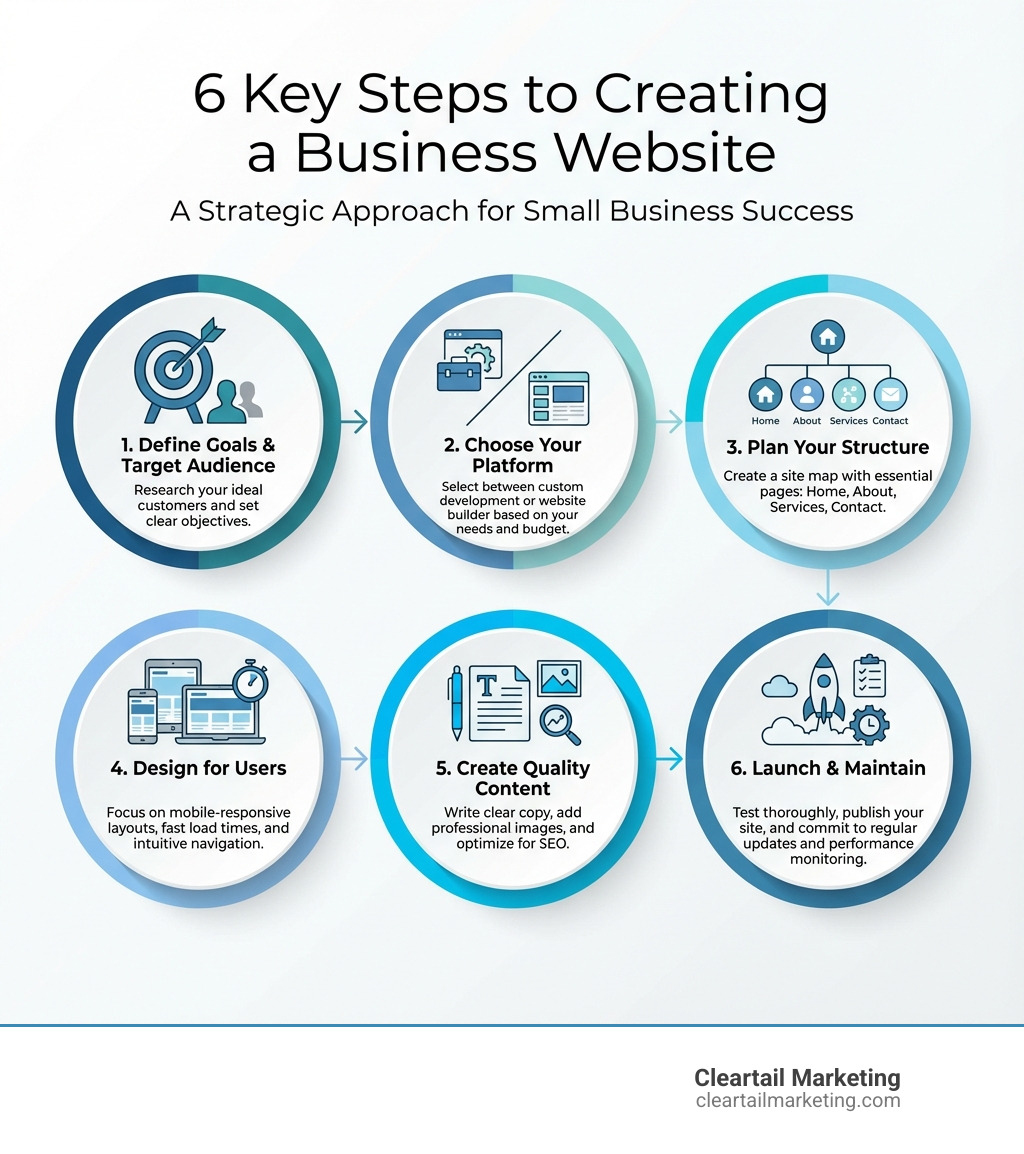
Laying the Foundation: Strategic Planning for Your Website
Before we even think about colors or fonts, the most crucial step in website design for small business is strategic planning. Think of it like building a house: you wouldn’t start hammering nails without a blueprint. Your website deserves the same thoughtful approach.

Our process begins with understanding your business goals—whether it’s generating leads, selling products, or building brand awareness. Knowing your “why” tailors every design decision. We then analyze your target audience: their needs, pain points, and online behavior. This allows us to design a site that speaks directly to them. Finally, competitor analysis helps us identify opportunities to make your website stand out. This planning phase ensures your site is a strategic asset, not just an online brochure.
Essential Elements of a Professional Website Design for Small Business
A professional website is a functional tool that guides visitors and builds trust. Here are the elements we consider non-negotiable for a successful website design for small business:
- Clear Navigation: Visitors should find what they’re looking for effortlessly. A logical menu is key, as users will leave if they get lost.
- Compelling Homepage: Your homepage is your digital window display. It must be visually striking and clearly communicate your value proposition upfront, as users form an opinion in just 50 milliseconds.
- About Us Page: This is where you tell your story, build rapport, and establish credibility. People want to connect with the humans behind the business.
- Products/Services Page: Clearly showcase what you offer with detailed descriptions, high-quality images, and transparent pricing.
- Contact Information: Make it easy for potential customers to reach you with clear contact forms, phone numbers, and addresses (if applicable).
- Strong Call-to-Action (CTA): Guide visitors on their next step. Whether it’s “Buy Now,” “Get a Quote,” or “Sign Up,” clear CTAs convert 2x more visitors.
- Professional Branding: Your website should reflect your brand’s personality through consistent colors, fonts, and imagery. This creates a cohesive and trustworthy experience.
- Security: In this day and age, security is paramount. Your website needs to protect user data and inspire confidence.
Choosing a Memorable and Effective Domain Name
Your domain name is your online address and a critical component of your website design for small business. It needs to be easy to remember, relevant to your brand, and ideally, end in “.com.” While other extensions exist, “.com” remains the most recognized and trusted. We recommend keeping it simple, short, and memorable. If you’re struggling for ideas, some platforms even offer business name generator tools to spark inspiration. Once you’ve landed on the perfect name, we’ll guide you through the domain registration process.
Website Design vs. Development: What Your Business Needs
The terms “website design” and “website development” are often used interchangeably, but they refer to distinct stages of creating your online presence.
- Website Design (UI/UX): This is all about the look, feel, and user experience. UI (User Interface) focuses on the visual elements users interact with—colors, typography, and layouts. UX (User Experience) is about the overall journey and how easily a user steers your site. A good designer ensures your site is intuitive and aesthetically pleasing.
- Website Development (Frontend/Backend): This is the engineering behind the scenes. Frontend developers build what you see and interact with using languages like HTML, CSS, and JavaScript. Backend developers handle the server-side logic, databases, and ensure everything functions smoothly.
For most small businesses, you’ll need both. A beautiful design is useless without functionality, and a functional site won’t attract users if it’s unappealing. While some basic website builders allow you to handle both aspects yourself, complex sites often require the expertise of both designers and developers.
At Cleartail Marketing, we offer comprehensive website design and development services that combine both disciplines to create a powerful and effective online presence for your business.
Building Your Site: Platforms, Content, and Costs
Once the strategic groundwork is laid, the next phase of website design for small business involves bringing that vision to life. This means choosing the right tools, crafting compelling content, and understanding the financial investment.

The creation process typically involves selecting a platform, structuring your site (often with a Content Management System or CMS like WordPress, which we use for many of our builds), and then populating it with engaging content.
How to Choose the Right Website Solution for Your Business
Choosing the right platform is pivotal. You essentially have two main paths:
- Custom Website Design and Development: This involves building a unique site from the ground up, custom-custom to your business needs. This offers maximum flexibility, scalability, and unique branding. Professional agencies like ours excel here, delivering solutions designed for optimal performance.
- DIY Website Builders: These platforms offer user-friendly interfaces and templates, allowing you to build a site yourself, often with drag-and-drop functionality.
Here’s a quick comparison to help you decide:
| Feature | Custom Website Solutions (e.g., Cleartail Marketing) | DIY Website Builders |
|---|---|---|
| Cost | Higher upfront, but long-term ROI | Lower monthly fees, but potential add-on costs |
| Ease of Use | Handled by professionals (you provide input) | User-friendly, but requires your time |
| Key Features | Custom, scalable, advanced integrations | Template-based, built-in standard features |
| Customization | Unlimited, unique branding | Limited by template and platform |
| Scalability | Highly scalable for future growth | Can be restrictive for complex needs |
| SEO Potential | Optimized for top rankings | Basic SEO tools, but can be limited |
| Support | Dedicated project manager, ongoing support | Help centers, community forums, limited direct support |
While DIY builders have democratized website creation, they often come with limitations in customization and advanced SEO. As one expert noted, “drag-and-drop website builders… often lead to limited, restrictive websites that fail to meet conversion goals.” We’ve seen businesses outgrow these solutions quickly.
Understanding the Costs of Website Design for Small Business
The cost of website design for small business is a common concern, and it can vary significantly based on your chosen approach and desired complexity.
- DIY Builder Costs: For professional features like a custom domain or e-commerce, DIY builders typically charge a monthly fee ranging from low-cost to over $100.
- Domain Costs: A custom domain name usually costs $10-$20 per year.
- Custom Design Costs: This is where the range widens dramatically. A simple custom website from a professional agency can start around $1,500. More complex sites with advanced features, integrations, and extensive content can range from $1,000 to well over $10,000, and even up to $100,000 for very large projects. These costs often include design, development, and initial SEO setup.
- Ongoing Maintenance Fees: Don’t forget the long-term. You’ll need to budget for hosting, security updates, and technical support. Ongoing maintenance plans from agencies can range from around $100 to several hundred dollars per month, depending on the level of support.
At Cleartail Marketing, we believe every business deserves a great website. Our custom website builds are designed to be an investment that delivers measurable returns, with transparent pricing custom to your specific needs.
Best Practices for Website Content and Organization
Content is king, but organization is its queen! Even the most beautiful website design for small business will fall flat if visitors can’t find what they need.
- Site Mapping and Wireframing: Before writing, we create a site map (a visual chart of your pages) and wireframes (page blueprints). This ensures a logical flow and strategic placement of elements like CTAs.
- Intuitive Navigation: An organized site presents information clearly. Since users skim, intuitive navigation is crucial.
- Clear Headlines: Headlines are incredibly powerful. They can be the difference between a visitor reading on or leaving your site. We focus on crafting compelling headlines that grab attention and convey immediate value. Learn how to write headlines that work to boost engagement.
- Readability and Conciseness: With users reading only about 28% of words on a page, content must be concise and easy to scan. Use bullet points and short paragraphs.
- Fresh and Current Content: Keep your website content updated. Outdated information signals neglect and can deter visitors. Regular blog posts or news updates also signal to search engines that your site is active and relevant.
Core Principles of Effective Website Design for Small Business
At the heart of every successful website design for small business are core principles that prioritize the user and adapt to the changing digital landscape. Our goal is to create a site that looks great, functions flawlessly, and connects with your audience.
A user-centric approach means every design decision is made with visitors in mind. Since first impressions happen in milliseconds, getting these principles right is non-negotiable.
The Critical Role of User Experience (UX) and UI Design
User Experience (UX) and User Interface (UI) are paramount. They dictate how easily and pleasurably someone interacts with your site.
- User Journey Mapping: We map potential user journeys to anticipate how visitors will steer your site to complete a goal.
- Ease of Navigation: An intuitive journey reduces frustration. Since 88% of users won’t return to a site after a bad experience, ease of use directly impacts your bottom line.
- Conversion Impact: Excellent UX/UI isn’t just about aesthetics; it’s about guiding users towards your desired actions. When a site is easy to use and visually appealing, conversions increase.
- Wireframing and User Testing: We use wireframes as blueprints before the full design. We also advocate for user testing to gather feedback and fix issues before launch.
Mastering Mobile-First Responsive Design
This is a necessity, not a trend. With 59% of user time spent on mobile and Google’s mobile-first indexing, a non-optimized site is invisible to a huge audience and to search engines.
Responsive design ensures your website looks and functions perfectly across all devices—desktops, tablets, and smartphones. This involves:
- Fluid Grids: Layouts that adjust dynamically.
- Flexible Images: Images that scale appropriately.
- Fast Mobile Load Times: Mobile users are impatient. Optimizing images and code for speed is crucial, as slow load times impact conversions.
We design with a “mobile-first” approach, ensuring essential content is prioritized for smaller screens, then expanding for larger displays. To dive deeper, you can learn about responsive design vs. mobile websites.
The Power of Branding, Images, and Graphics
Visuals are the soul of your website design for small business, instantly communicating your brand’s personality and professionalism.
- Brand Consistency: Your website needs to be an extension of your brand identity. Consistent use of your logo, brand colors, and typography builds recognition and trust.
- Color Psychology: Colors evoke emotions. We strategically choose color palettes that align with your brand’s message and target audience.
- Typography: The fonts you choose convey tone. Legible, on-brand typography improves readability and reinforces your brand’s style.
- High-Quality, Optimized Images: Blurry images kill credibility. We use professional, high-resolution images optimized for fast load times. Optimizing file size is crucial to avoid slow loading.
- Illustrations: Sometimes, illustrations can engage users in more personal and unique ways than photographs, adding character to your site. For inspiration, see how different visual elements are used effectively in showcasing startup website designs.
How to Ensure Your Website is Accessible to All Users
An inclusive website design for small business welcomes everyone. Web accessibility means designing sites that people with disabilities can use. This broadens your audience and improves your brand’s reputation.
We adhere to Web Content Accessibility Guidelines (WCAG) to ensure:
- Alt Text for Images: Provides descriptions for screen readers, helping visually impaired users understand visual content.
- Keyboard Navigation: Allows users who cannot use a mouse to steer your site using only their keyboard.
- Color Contrast: Ensures text is easily readable against background colors.
- Clear Headings: Structuring content with clear headings (H1, H2, etc.) helps screen readers and improves overall readability.
Accessibility also benefits users with slower internet connections by ensuring basic functionality is available regardless of bandwidth.
Turning Your Website into a Growth Engine
A beautifully designed website’s ultimate purpose is to drive growth. This requires marketing integration and constant optimization to convert visitors into loyal customers.
This section focuses on how your website can become a powerful engine for leads and sales through strategic marketing and Conversion Rate Optimization (CRO).
How to Optimize Your Website for Search Engines (SEO)
SEO (Search Engine Optimization) is how people find your website design for small business on Google. A stunning site won’t help if no one can find it.
- On-Page SEO: We optimize elements on your web pages by performing keyword research and integrating those terms into your content, headings, and meta descriptions.
- Fast Load Times: Page speed is a critical SEO factor. Slow websites frustrate users and are penalized by search engines, which impacts conversions.
- Quality Content and Blogging: Relevant content is the backbone of SEO. Businesses that blog get 67% more leads. Regular posts establish authority and provide fresh content for search engines.
- Link Building: Earning high-quality backlinks from other reputable websites signals to search engines that your site is trustworthy, boosting your rankings.
For a comprehensive dive into SEO, we recommend checking out The Beginners Guide to SEO.
Effectively Showcasing Products and Services
Your website is your showroom; how you present offerings directly impacts sales.
- High-Quality Photos: This is non-negotiable. Use clean, professional photos of your products. For services, show your team in action or finished work.
- Clear Descriptions and Pricing: Don’t leave customers guessing. Provide detailed, benefit-oriented descriptions and be transparent about pricing where appropriate.
- Customer Testimonials and Reviews: Social proof is incredibly powerful. Showcase positive feedback from satisfied customers to build trust.
- Case Studies: For service-based businesses, detailed case studies demonstrating how you’ve helped other clients are invaluable.
- Portfolio/Gallery: Visually demonstrate your work. A strong portfolio speaks volumes.
Driving Leads and Conversions with Your Website
The ultimate goal of your website design for small business is to convert visitors. Here’s how we make that happen:
- Effective Calls-to-Action (CTAs): We strategically place clear, compelling CTAs throughout your site, such as:
- “Shop Now”
- “Get a Free Quote”
- “Schedule a Consultation”
- “Download Our Guide”
- “Contact Us Today”
- Lead Magnets: Offer valuable content (e-books, checklists) for an email address to build your mailing list and nurture leads.
- Contact Forms: Simple, easy-to-use contact forms are essential for inquiries.
- Live Chat: Offering live chat can provide instant support and answer questions, reducing friction in the customer journey.
- Blogging: As mentioned, blogging is a powerful lead-generation tool. Businesses that blog get 67% more leads by attracting visitors interested in your expertise.
Leveraging Website Analytics to Improve Performance
Once your site is live, the work begins. We must track performance to understand what’s working.
- Google Analytics Setup: We integrate tools like Google Analytics to track crucial visitor data.
- Key Metrics: We monitor metrics such as:
- Traffic: How many visitors are coming to your site?
- Bounce Rate: What percentage of visitors leave after viewing only one page?
- Conversions: How many visitors complete a desired action?
- Time on Site: How long are visitors staying?
- A/B Testing: This data-driven approach allows us to test different page elements (like headlines or buttons) to see which performs better, enabling continuous improvement.
- Gathering User Feedback: Implementing feedback forms or surveys can uncover valuable user perspectives.
Ongoing Maintenance and Update Requirements
Like a physical store, your website needs regular upkeep to remain functional, secure, and relevant. Neglect leads to security risks and a poor user experience.
- Software and Plugin Updates: Regular updates to your CMS (like WordPress) and any plugins are essential for security.
- Security Scans and Monitoring: Proactive security measures protect your site from malware and cyber threats.
- Regular Backups: In case of an issue, regular backups ensure your site can be quickly restored.
- Content Freshness: Keep your content current, including business hours, product details, and blog posts.
- Checking for Broken Links: Broken links create a frustrating user experience and can harm your SEO. We regularly check and fix them.
Managing these tasks can be a burden, which is why we offer comprehensive website maintenance services, allowing you to focus on your business.
Frequently Asked Questions about Small Business Website Design
Here are some common questions we get about website design for small business:
How much does it cost to make a website for a small business?
The cost of a website for a small business varies widely. A DIY website builder might cost anywhere from $10 to over $150 per month, plus $10-$20/year for a custom domain. For a professionally designed custom website, prices typically start around $1,500 for a basic site and can go well over $10,000 for more complex projects. The total cost depends on factors like the number of pages, design complexity, and e-commerce functionality.
What are the most essential pages for a small business website?
Every small business website should have a Homepage, an About Us page (to tell your story and build trust), a Products or Services page (to detail your offerings), and a Contact page (with clear contact information and a form). Depending on your business, you might also benefit from a Blog, Testimonials/Reviews page, Portfolio/Gallery, or an FAQ page.
Do I need coding skills to design a small business website?
No, you generally do not need coding skills. Many modern website builders offer user-friendly drag-and-drop editors and pre-built templates that allow you to create a professional website without writing a single line of code. If you choose to work with a professional web design agency like Cleartail Marketing, we handle all the technical aspects for you.
Conclusion: Your Next Step to a Powerful Online Presence
Thoughtful website design for small business is no longer a luxury—it’s a fundamental necessity for success in today’s digital world. Your website is your 24/7 digital storefront, your primary tool for credibility, lead generation, and sales. We’ve explored the essential elements from strategic planning and platform selection to mastering UX, mobile responsiveness, and continuous optimization.
A professional website design isn’t just an expense; it’s a critical investment in your business’s growth. It speaks volumes about your brand, builds trust with potential customers, and provides the foundation for all your digital marketing efforts.
While DIY options offer accessibility, the value of professional expertise in crafting a high-performing, conversion-focused website cannot be overstated. At Cleartail Marketing, we pride ourselves on our experience and proven results. We understand the unique challenges and opportunities small businesses face.
Ready to transform your online presence into a powerful growth engine? Let us help you create a digital storefront that not only looks exceptional but also delivers tangible results.
Get a professional website design that drives results for your business
