



WHY COMPANY REPUTATION MANAGEMENT IS YOUR MOST VALUABLE BUSINESS ASSET
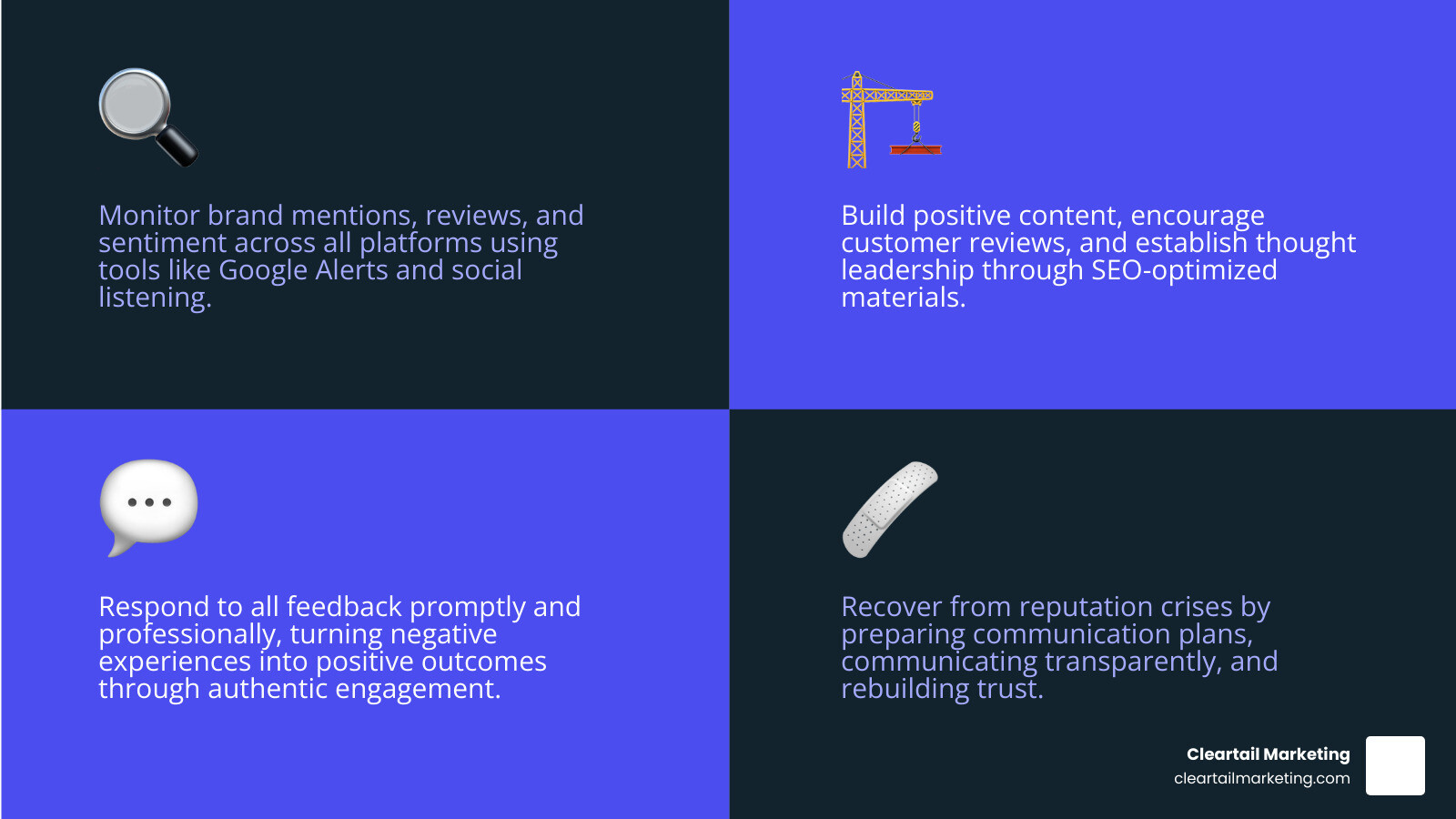
Company reputation management is the practice of monitoring, influencing, and maintaining public perception. It involves tracking brand mentions, building positive content, responding to feedback, and recovering from crises.
A first impression of your business forms in less than 0.2 seconds online. With 86% of consumers preferring brands with a good reputation, that impression is critical.
It’s not just about managing negative reviews; it’s about building trust that drives results. Strong reputations attract top talent, command premium prices, and foster customer loyalty. Conversely, just four negative search results can cost you nearly 70% of potential business.
Many businesses admit their reputation management is “basic” or “non-existent”—a dangerous gap when up to 80% of market value comes from intangible assets like brand equity.
This guide will walk you through how to monitor your online presence, build positive content, respond effectively, and prepare for crises. You’ll learn practical strategies backed by real-world examples.
I’m Magee Clegg, founder and CEO of Cleartail Marketing. We’ve used these strategic company reputation management techniques to help B2B companies grow by 278% in 12 months and generate over 170 5-star reviews in two weeks. I’ll show you the same approaches that deliver results for our 90+ clients.
THE ‘WHY’: HOW REPUTATION SHAPES YOUR BUSINESS SUCCESS
Think of your reputation as currency. Not the kind you can touch, but the kind that determines whether customers choose you or your competitor. Whether talented people want to work for you. Whether partners want to do business with you.
Here’s what makes company reputation management so critical: your reputation directly influences every major business outcome. When potential customers trust your brand, they’re more likely to buy from you, pay premium prices, and stick with you long-term. When they don’t trust you, they simply walk away.
The numbers tell the story. 86% of consumers say it’s essential that they purchase products from brands with a good reputation. That’s not a small preference—it’s a deal-breaker for the vast majority of buyers. Your reputation isn’t just about feeling good or looking professional. It’s about whether your business grows or stagnates.
At Cleartail Marketing, we’ve seen how reputation impacts everything from customer acquisition costs to employee retention. Companies that invest in their reputation consistently outperform those that ignore it. For a deeper look at how this works for brands specifically, check out our guide on Brand Online Reputation Management.
The Financial Impact of a Strong Reputation
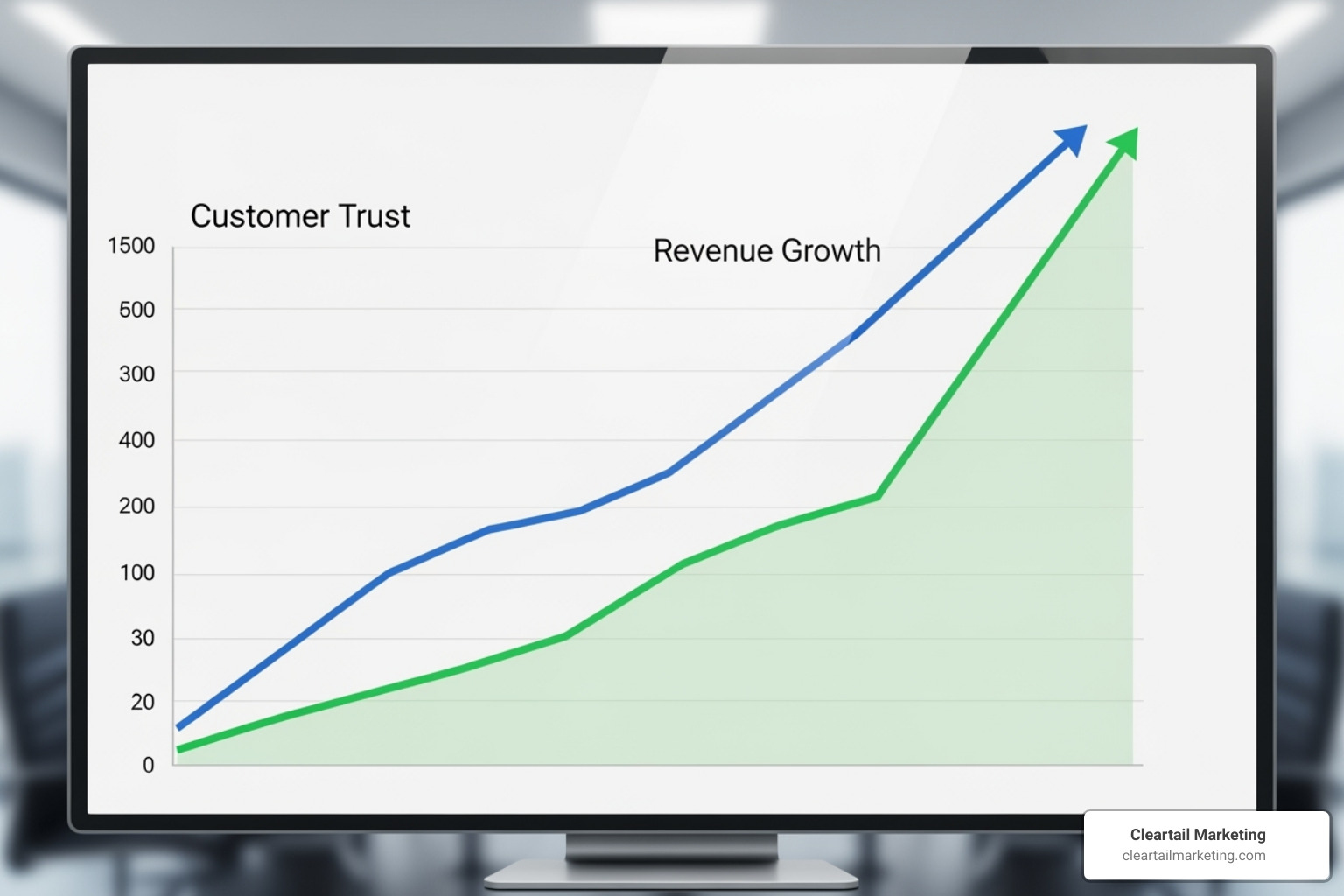
A solid reputation makes you money. Companies with strong reputations enjoy higher price-earnings multiples and a lower cost of capital. This competitive advantage translates to your bottom line through premium pricing, increased sales, and sustained earnings from loyal customers. Perhaps most importantly, a strong reputation helps you attract top talent, making recruiting easier and improving retention.
The Risks of a Damaged Reputation
Conversely, a damaged reputation creates a downward spiral. You’ll face loss of customers, decreased revenue, and negative search results that deter new business. Recruiting becomes a nightmare, with difficulty hiring top talent and the risk of damaged partnerships. The financial hit from a crisis far exceeds the cost of proactive management. Recovering from reputation damage is always more expensive than prevention. If you’re already facing issues, our Business Reputation Repair Services can help.
THE ‘WHAT’: CORE COMPONENTS OF AN EFFECTIVE COMPANY REPUTATION MANAGEMENT STRATEGY
Think of company reputation management as building a house. You need a solid foundation, strong walls, and a plan for when storms hit. The best strategies prevent problems before they start and handle issues when they arise.
At Cleartail Marketing, we’ve seen what separates companies that thrive from those that struggle. The difference comes down to a handful of core practices: monitoring what people say about you, creating content that tells your story, managing reviews with care, engaging genuinely on social media, and using SEO to make sure the right information shows up when people search for you. Our comprehensive Online Reputation Management Services bring all these pieces together into one cohesive strategy.
Proactive Monitoring for Effective Company Reputation Management
You can’t manage what you don’t monitor. Proactive monitoring means using tools like Google Alerts for basic notifications, social listening tools for tracking conversations across platforms, and review tracking software to aggregate feedback. Since Google accounts for almost 60% of all online reviews, it’s a critical platform to watch.
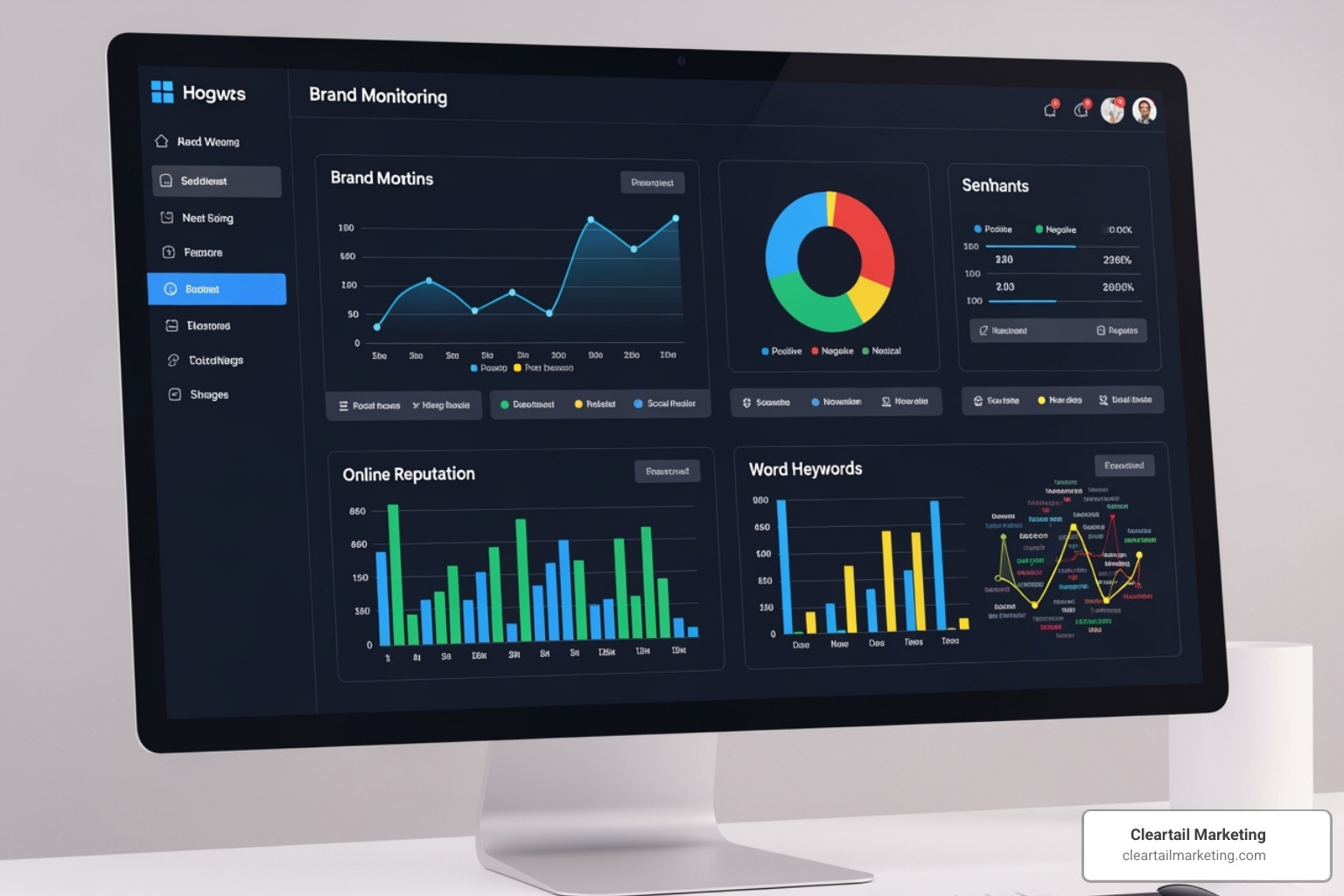
By tracking brand mentions, using sentiment analysis, and monitoring keyword associations, you can spot issues early and find opportunities to amplify positive conversations.
Building and Maintaining a Positive Online Presence
While monitoring is defensive, building a positive presence is offensive. This involves creating the narrative you want people to see. A strong content strategy (blogs, case studies) showcases your expertise, while SEO optimization ensures this positive content ranks high in search results, burying less favorable items. Authentic social media engagement and establishing thought leadership through webinars or publications build credibility.
Don’t forget to leverage happy customers by encouraging positive reviews and sharing user-generated content like testimonials. Strategic influencer partnerships can also amplify your message. Together, these tactics form a Positive Reputation Management strategy that builds a resilient digital presence.
Responding to Negative Feedback and Online Reviews
How you respond to criticism often matters more than the criticism itself. Effective response guidelines are built on timeliness, empathy, and professionalism. Acknowledge the feedback quickly, apologize if appropriate, and offer a solution. A key tactic is to take conversations offline to resolve specific issues privately, which often transforms a disgruntled customer into a loyal advocate.
Also, stay alert for fake reviews; learn to spot and report them to protect your standing. For more detailed guidance, see our guide on How to Manage Your Online Reputation.
THE ‘WHEN’: PREPARING FOR AND MANAGING A REPUTATION CRISIS
Even companies with spotless records can face a reputation crisis. The difference between weathering the storm and crumbling is preparation. A solid company reputation management crisis plan provides a roadmap to avoid panicked hesitation.
Your plan should define what constitutes a crisis, establish clear communication protocols, and prioritize transparency. Having established protocols and procedures can cut response time from days to hours, which is critical. Learn more in our guide to Business Reputation Crisis Management.

Pre-Crisis: Building Your Defenses
This phase is about building defenses before a crisis hits. Start with a vulnerability assessment to identify weak points. Assemble a crisis response team with clearly assigned roles for media, internal communications, and decision-making. Prepare pre-approved messaging and holding statements to ensure your initial response is measured, not reactive. Finally, map out and test your internal and external communication channels.
During a Crisis: Executing the Plan
When a crisis strikes, act with both speed and accuracy. Acknowledge the situation swiftly to prevent speculation. If your company erred, own it with a genuine apology from leadership—deflection only worsens the situation. Communicate facts, explain your actions, and provide a timeline for updates. Ensure your messaging is consistent across all platforms and teams. Throughout the crisis, constantly monitor public sentiment to adjust your strategy as needed.
Post-Crisis: Rebuilding Trust
After the crisis, the real work of rebuilding trust begins. Actions now speak louder than words. Visibly implement the changes you promised to demonstrate tangible improvement. Follow up with affected customers and stakeholders to show your commitment. Continue monitoring your reputation to ensure trust is rebuilding. Finally, conduct a thorough post-mortem to learn from the incident and strengthen your crisis plan. A well-handled crisis can ultimately become proof of your company’s character and resilience.
THE ‘HOW’: DEVELOPING A SUSTAINABLE, LONG-TERM STRATEGY
Company reputation management isn’t a one-time fix; it’s an ongoing commitment woven into your daily operations. A sustainable strategy requires understanding different dimensions of reputation work, prioritizing ethics, using the right tools, and measuring your results.
A sustainable strategy integrates reputation management into daily operations. This involves several dimensions: Online reputation management handles your digital footprint (search results, reviews). Brand reputation management covers the perception of your products and identity. Corporate reputation management addresses your image with all stakeholders, including investors and employees. Finally, crisis reputation management is your emergency response plan. For large organizations, Corporate Reputation Management is particularly complex, involving investor relations and social responsibility.
The Role of Employees, Ethics, and Transparency
Your employees are your most powerful brand ambassadors. An engaged team that feels valued will naturally champion your brand. However, today’s consumers also prioritize shared values, with 64% of customers citing them as a primary reason for their brand relationship. People want to do business with companies that operate ethically and transparently. With 86% of consumers demanding more transparency, being honest—especially during difficult times—builds powerful credibility. An internal culture built on strong ethics and transparency will authentically attract the right customers, partners, and employees.

Leveraging Technology and Measuring ROI
Technology makes proactive reputation management possible. Reputation management software automates monitoring across platforms, while AI tools using Natural Language Processing (NLP) can analyze the context and sentiment of brand mentions. However, technology is useless without measurement. Track Key Performance Indicators (KPIs) to prove ROI and guide your strategy. Key metrics include your sentiment score (the tone of online conversations), average review ratings, search engine rankings for your brand name, and your Net Promoter Score (NPS), which measures customer loyalty. Tracking these KPIs provides a clear picture of your reputation’s health and helps you make data-driven decisions.
Developing a Long-Term Company Reputation Management Plan
A long-term plan starts with assigning clear responsibility, typically to marketing or communications with executive oversight. Set specific, measurable goals, such as “Increase our average Google review rating from 3.8 to 4.5 stars in six months.” Your plan must be adaptable to shifting consumer behavior and new platforms. Budget realistically for tools and skilled personnel, as the investment prevents far greater losses. Successful businesses treat reputation management as an ongoing function, not a one-off project. Following Reputation Management Best Practices ensures your strategy remains effective and resilient.
REPUTATION MANAGEMENT IN ACTION: REAL-WORLD EXAMPLES
Theory is valuable, but nothing teaches quite like real-world examples. When we look at how major companies have handled their reputation challenges, we see patterns emerge—what works, what doesn’t, and what it takes to bounce back from serious damage. These stories are roadmaps for understanding how company reputation management plays out when the stakes are highest.
The Good: Starbucks’ Swift Crisis Response
In 2018, a Philadelphia Starbucks manager had two Black men arrested for trespassing while they waited for a friend. The incident went viral, sparking outrage. Starbucks’ response is a model for good crisis management. CEO Kevin Johnson issued a swift, personal apology, took full responsibility, and met with the men. More importantly, the company took decisive action: it closed 8,000 U.S. stores to conduct anti-bias training for 175,000 employees and changed its policy to allow non-paying guests to use its spaces. As noted by Forbes, How Starbucks received an A in crisis management was through swift acknowledgment, sincere apology, and meaningful action.
The Bad: Volkswagen’s “Dieselgate” Scandal
In 2015, Volkswagen was caught in the “Dieselgate” scandal, having deliberately programmed its diesel engines to cheat on emissions tests. The cars polluted up to 40 times the legal limit in real-world driving. The deception shattered the brand’s reputation for reliability and resulted in over $30 billion in penalties. The company’s slow, evasive initial response worsened the damage, leading to a long recovery process. The lesson is clear: deception destroys trust, and rebuilding it requires fundamental change and years of consistent, transparent action.
The Turnaround: Nike’s Labor Practices
In the 1990s, Nike’s reputation was damaged by reports of sweatshop labor in its overseas factories, leading to global protests and boycotts. After an initial defensive response, Nike reversed course. The company acceptd transparency and accountability, publishing its factory list, implementing strict labor standards with independent audits, and engaging with critics. The turnaround took years, but Nike rebuilt its reputation by making systemic changes, proving that even severe damage can be repaired with genuine commitment and transparency.
These three examples show us the full spectrum of company reputation management in action. Starbucks demonstrates how swift, empathetic crisis response can actually strengthen your reputation. Volkswagen shows the catastrophic consequences of deception and inadequate response. Nike proves that even severe reputational damage can be overcome with sustained commitment to real change. The common thread? How you respond matters more than the crisis itself.
FREQUENTLY ASKED QUESTIONS ABOUT REPUTATION MANAGEMENT
We talk to business owners every day who are trying to wrap their heads around company reputation management. Here are answers to the most common questions.
Is reputation management a one-time fix or an ongoing process?
Reputation management is never “done”; it’s an ongoing process, like maintaining your health. The digital landscape is always changing, and people are always forming opinions about your business. Proactive monitoring and continuous effort are essential to keep up. Thriving businesses treat reputation management as a permanent commitment, not a one-time project.
Can all negative content be permanently deleted?
Permanently deleting negative content is often impossible. Platforms like Google and Yelp protect freedom of speech and will only remove content that violates specific policies (e.g., hate speech, fake reviews). Legal options for defamation are expensive and slow. A more effective approach is a suppression strategy: burying negative content by creating a large volume of positive, high-quality content. This strategy focuses on controlling the narrative by making positive information the most visible part of your online presence.
How long does it take to repair a company’s reputation?
The time it takes to repair a reputation varies based on the severity of the damage, the effectiveness of your response, and your consistency. Minor issues might be resolved in weeks, but a major crisis can take months or years to overcome. Rebuilding trust takes time; there are no overnight fixes. The fastest recoveries involve a quick response, genuine accountability, and consistent, demonstrated change over time. With patience and the right strategy, even severely damaged reputations can be restored.
CONCLUSION
Your reputation is your most valuable business asset, something you must build and protect daily. As we’ve covered, effective company reputation management is critical for attracting talent, justifying premium prices, and retaining customers. It requires proactive monitoring, strategic content, thoughtful responses, and crisis preparedness.
This isn’t a one-time project but an ongoing commitment to excellence and transparency. At Cleartail Marketing, we’ve seen these strategies drive real growth, helping clients generate hundreds of 5-star reviews and achieve growth of 278% in 12 months. We’ve done it for our 90+ active clients across the United States and Canada, and we can do it for you.
Your reputation is being shaped right now. The only question is whether you’ll be part of the conversation. Contact a leading reputation management agency to protect and enhance your brand today. Let’s build something remarkable together.
