



WHY UNDERSTANDING DIGITAL AND SOCIAL MEDIA MARKETING MATTERS FOR YOUR BUSINESS
Digital and social media marketing are key to modern business growth, but they are distinct concepts. Here’s the difference:
- Digital Marketing: The broad term for all online marketing, including SEO, email, PPC, content, and social media.
- Social Media Marketing: A specific part of digital marketing focused on platforms like Facebook, Instagram, and LinkedIn.
- Together: They form a powerful strategy to reach customers, build brand awareness, and drive results.
The average US adult spends over two hours on social media daily, and over 70% of people with a positive social media experience will recommend that business. This presents a huge opportunity if you can leverage digital marketing’s reach with social media’s engagement.
Understanding how these channels work together is crucial for success. I’m Magee Clegg, founder of Cleartail Marketing. We’ve helped over 90 B2B companies achieve real ROI with digital and social media marketing, like increasing one client’s revenue by 278% in a year. This guide will show you how to use these channels effectively and avoid common mistakes.
The Big Picture: Defining Digital Marketing vs. Social Media Marketing
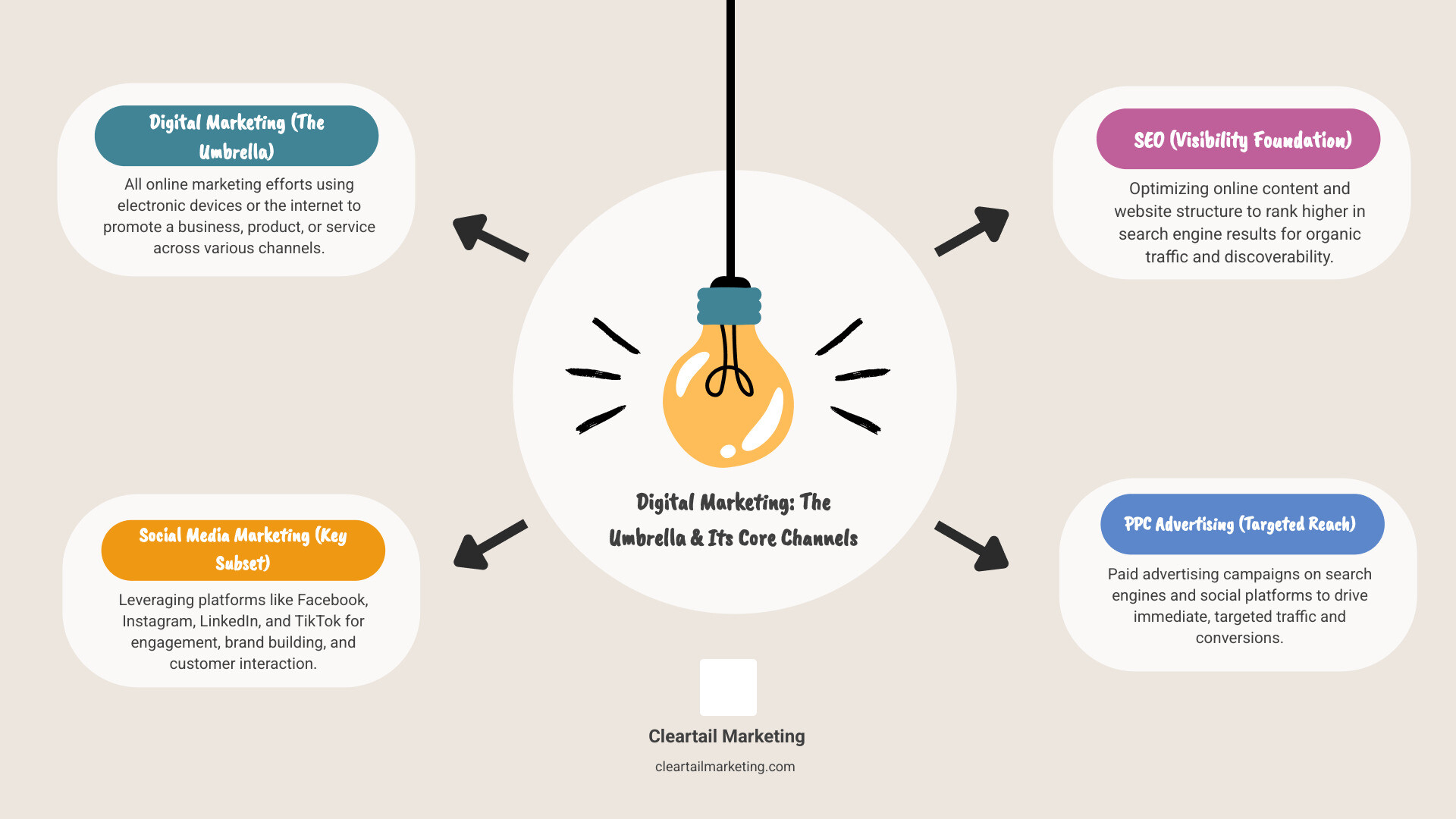
Many people confuse digital and social media marketing, but understanding the distinction is the first step toward a strategy that works. Simply put, digital marketing is the entire universe of online marketing, while social media marketing is one important planet within it.
Digital marketing includes all marketing on the internet or electronic devices, from SEO and PPC to email and social media. It’s about guiding customers to your business online. Cleartail Marketing offers comprehensive Digital Marketing Agency Services to steer this landscape.
Social media marketing is a specific component focused on platforms like Facebook, Instagram, and LinkedIn. It’s used to build your brand, connect with customers, and drive sales by fostering community and conversation.
The key takeaway is that all social media marketing is digital marketing, but not all digital marketing is social media. This distinction is vital for planning your time and budget.
| Feature | Digital Marketing | Social Media Marketing |
|---|---|---|
| Scope | Broad: encompasses all online marketing efforts | Narrow: focuses specifically on social media platforms |
| Channels | SEO, PPC, email, content, social media, web design, mobile, analytics, etc. | Facebook, Instagram, LinkedIn, X, TikTok, YouTube, Snapchat, etc. |
| Primary Goal | Drive overall online visibility, leads, sales, and customer engagement across all digital touchpoints | Build brand presence, foster community, drive engagement, and generate leads/sales directly on social platforms |
| Relationship | The “umbrella” term, a holistic approach | A “subset” or component under the digital marketing umbrella |
The Broad Scope of Digital Marketing
Digital marketing uses internet-connected devices to engage customers and remove friction from their buying journey. Tactics generally fall into two categories:
- Pull Marketing: This is when customers seek you out, such as through a Google search or by visiting your website. SEO and content marketing are critical here, as you are providing answers when users need them, which builds trust. The Introduction to Social Media and Digital Marketing: Digital Marketing Characteristics offers more on these dynamics.
- Push Marketing: This is when you initiate the conversation through emails or ads. When done with proper consent and targeting, it can be highly effective.
What truly sets digital and social media marketing apart from traditional methods is data. We can track nearly every interaction, allowing for constant learning and improvement to ensure every dollar is well-spent.
How Social Media Marketing Fits In
Social media marketing is where digital marketing becomes personal and interactive. It’s about building real relationships and community, not just broadcasting messages.
- Community Building: You create a space where people feel connected to your brand and each other.
- Customer Engagement: Immediate, two-way conversations build loyalty. Responding to a tweet can make nearly 80% of X users feel more positive about a business.
- Brand Persona: You can show your company’s personality and values through photos, videos, and stories.
- Influencer Marketing: Partnering with trusted creators can lend their credibility to your brand.
- User-Generated Content: Customer photos, reviews, and experiences are authentic, free, and highly persuasive.
We help businesses harness these elements through our Social Media Marketing services, turning platforms into engines for growth and trust.
Core Components of a Winning Digital Marketing Strategy
A winning digital and social media marketing strategy is an integrated system, not a random collection of tactics. Every piece must work together, starting with a strong foundation.
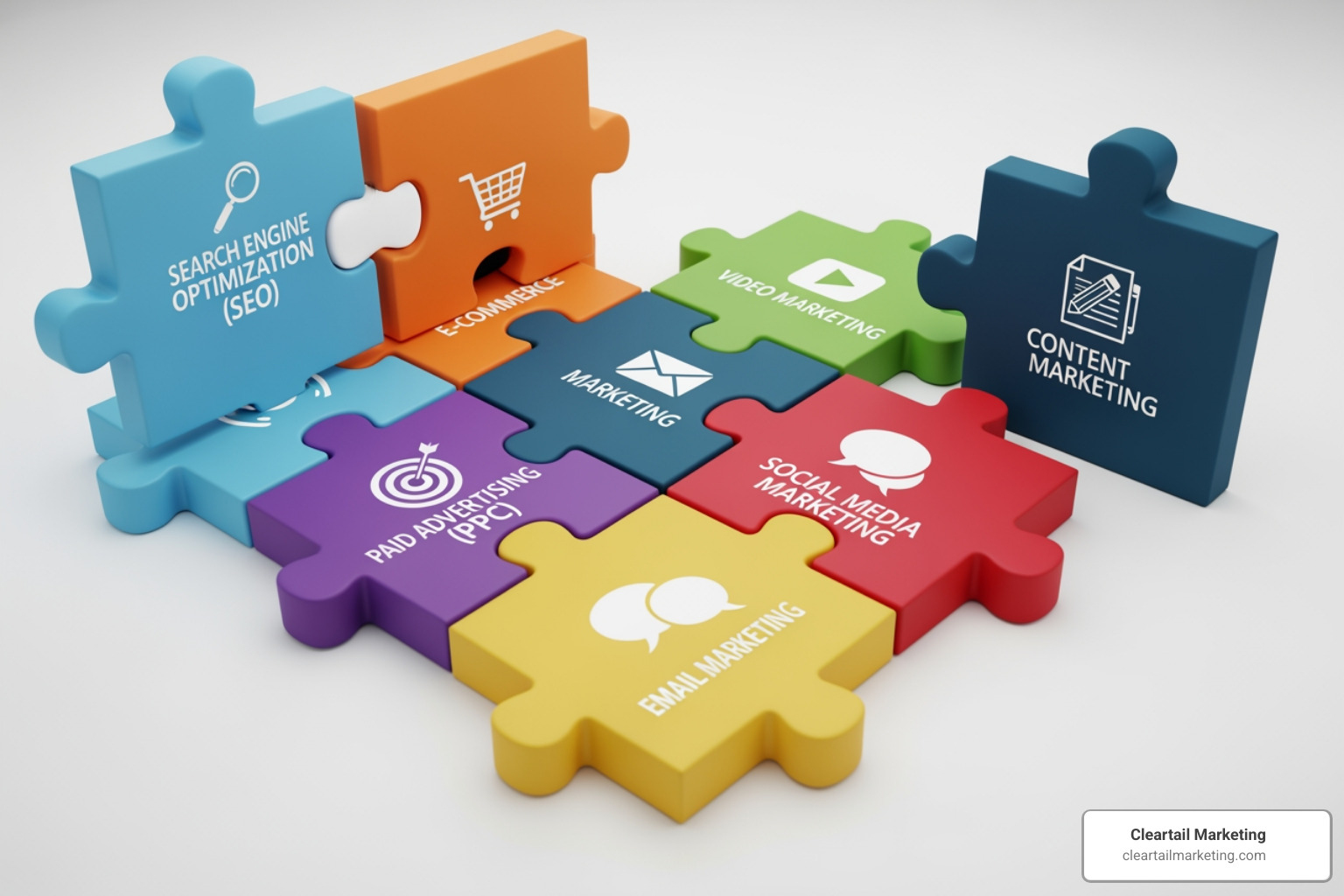
At Cleartail Marketing, we view your website as the central hub for all marketing efforts. It must be user-friendly, fast, and visually appealing to support every other channel. From this base, we build out with multi-channel communications to reach your audience wherever they are online. To learn more, see our guide on What Are the Services Offered by a Digital Marketing Agency.
Search Engine Optimization (SEO): The Foundation of Visibility
If your business doesn’t appear in search results, it’s practically invisible. SEO ensures you’re found when customers are looking for your services. Our approach includes:
- Keyword Research: We find the exact phrases your ideal customers use, focusing on keywords that show strong intent.
- On-Page SEO: We optimize your web pages with compelling content and proper structure to rank higher.
- Backlinks: We acquire links from reputable sites, which act as “votes of confidence” that boost your authority with Google.
- Technical SEO: We handle the behind-the-scenes work, ensuring your site is fast, mobile-friendly, and easily crawlable.
Effective SEO is a long-term investment that builds trust and compounds over time. Learn more about What Does Search Engine Optimization entail and how we apply SEO for Local Business.
Pay-Per-Click (PPC) Advertising: Driving Targeted Traffic
While SEO builds long-term visibility, PPC delivers immediate results. You pay each time someone clicks your ad, giving you precise control over who you reach and how much you spend.
- Google Ads: These ads appear at the top of search results, reaching high-intent users actively looking for your services.
- Meta Ads: On Facebook and Instagram, these ads target users based on detailed demographics, interests, and behaviors.
- Programmatic Advertising: This automated method uses AI to efficiently place your ads across various websites and apps.
PPC requires careful ad spend management and conversion tracking to ensure a positive return. It’s a powerful tool within our broader Paid Search and Pay Per Click Marketing strategies.
Email Marketing: Nurturing Leads and Customers
Email marketing is far from dead; it remains one of the most effective channels, with a median ROI of 122%. Our approach focuses on:
- Campaign Management: We craft compelling content that provides value, from newsletters to promotional offers.
- Automation: We set up automated workflows, like welcome series or drip campaigns, to nurture leads on autopilot. Our Designing Drip Email Campaigns service can help.
- Segmentation: We divide your list into smaller groups based on behavior or demographics for personalized, relevant messaging.
Email gives you a direct line to your audience to foster loyalty and drive repeat business. For more, see our Email Marketing Best Practices.
Content Marketing: Building Authority and Trust
Content marketing is about creating valuable, relevant content to attract and educate your audience, positioning your brand as a trusted expert. Key formats include:
- Blogs: In-depth articles that answer common questions help you rank in search engines and build authority.
- Videos: From tutorials to brand stories, video engages audiences in ways text cannot.
- Infographics, Ebooks, and Whitepapers: These formats make complex information digestible and can serve as valuable lead magnets.
By consistently producing high-quality content, you build thought leadership and credibility. Content marketing is a full-funnel tactic that increases visibility and drives organic traffic. Learn more with our Content Marketing for Tech Companies insights and tips on How to Boost Blog Traffic.
Leveraging Social Media for Business Growth and Engagement
Let’s dive deeper into the social media subset of digital marketing. For businesses, it’s a dynamic arena for growth that demands an “inbound approach” focused on building community and providing value, not just making a sale.
At Cleartail Marketing, we help businesses transform their social media from an afterthought into a strategic asset. This means thoughtful content creation and active community management to turn followers into loyal customers. The key is to stop interrupting and start engaging.
This approach leads to stronger customer relationships, increased brand loyalty, and direct sales. For a comprehensive look, check out our Social Media Engagement Ultimate Guide.
Building Your Social Media Marketing Plan
An effective social media presence requires a roadmap. Businesses that succeed start with a plan.
- Goal Setting: We define clear, measurable goals first. Are you aiming for brand awareness, website traffic, or lead generation?
- Audience Identification: We go beyond demographics to understand your audience’s problems, needs, and preferred platforms.
- Content Calendar: A structured calendar ensures a steady stream of high-quality content and prevents last-minute scrambling. Learn more with our guide to Create a Social Media Content Calendar.
- Brand Voice: We establish a consistent, authentic personality for your brand that makes your interactions memorable.
Organic reach has its limits, which is where paid social comes in. Our social media advertising services help you reach highly targeted users and amplify your message.
Choosing the Right Platforms for Your Business
The key isn’t to be everywhere—it’s to be effective where your audience is. Here’s a quick rundown:
- Facebook: As the largest platform, it’s ideal for building communities and running targeted ads to reach a diverse, multi-generational audience.
- Instagram: This visual platform is a powerhouse for brand building and product showcasing. 81% of people use it to research products and services.
- LinkedIn: Essential for B2B companies, this is the prime spot for thought leadership and connecting with decision-makers. 4 out of 5 people on LinkedIn drive business decisions.
- X (formerly Twitter): This platform is for real-time news and customer service. Nearly 80% of users feel more positive about a business after receiving a response to their tweet.
- TikTok: The fastest-growing platform is driven by entertainment. Content should be engaging and relatable, as 46% of users watch with no other distractions.
- Snapchat: This platform targets younger demographics (13-34) with fun, ephemeral content.
Choosing the right platforms depends on your audience, goals, and resources. We help clients make strategic choices with various Social Media Management Packages to fit their needs.
Measuring Success and Navigating the Challenges of Digital and Social Media Marketing
The real work in digital and social media marketing begins after you launch. Success depends on measuring what matters and navigating challenges effectively.
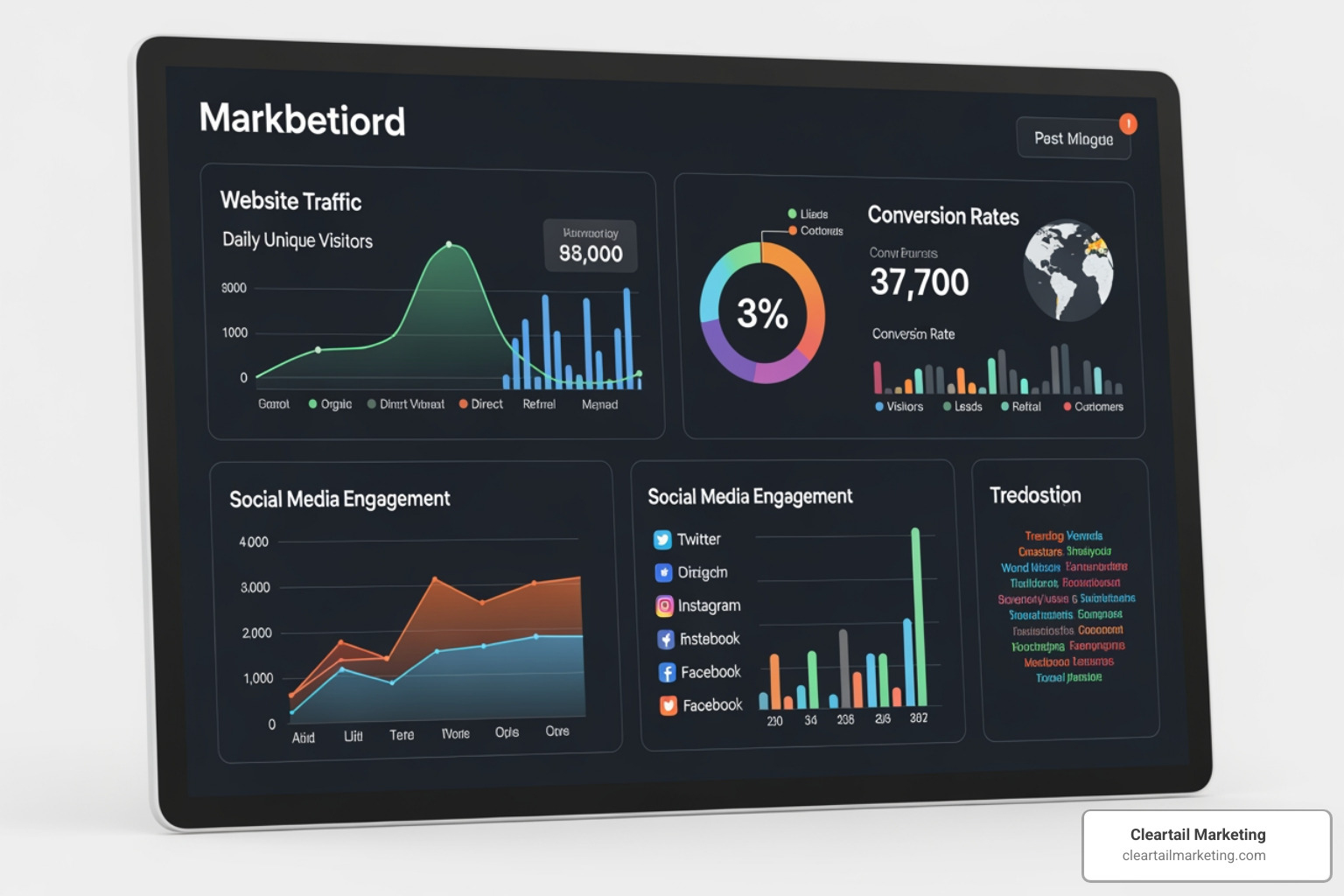
At Cleartail Marketing, we use data-driven insights to constantly monitor performance and adjust strategies. This proactive management ensures your marketing dollars work hard and protects your brand when challenges arise. Our Online Reputation Management services are a vital part of this effort.
Critical Metrics for Measuring Campaign Success
Vanity metrics like follower counts don’t pay the bills. We focus on metrics that show real business impact:
- Reach: How many unique people saw your content?
- Engagement Rate: How did your audience interact (likes, comments, shares)? High engagement means your content resonates.
- Conversions: Desired actions like form submissions or purchases that move prospects toward becoming customers.
- Return on Investment (ROI): The ultimate scorecard, calculating the financial return from your marketing spend. Our guide on Marketing Campaign ROI explains how we optimize this.
- Share of Voice: Your brand’s presence in online conversations compared to competitors.
- Referrals: How much traffic and how many leads come to your website from your digital campaigns.
The key is to align these metrics with your specific business goals.
Overcoming Common Drawbacks and Challenges
Digital and social media marketing has its problems. Understanding them helps you prepare.
- Time Consumption: Effective marketing requires consistent effort. Partnering with an agency can manage this workload efficiently.
- Negative Feedback: It’s inevitable. The key is to handle it professionally and empathetically. A quick, thoughtful response can turn critics into advocates. This is a core part of How Does Online Reputation Management Work.
- Algorithm Changes: Platforms constantly update their algorithms. This requires staying informed, testing new approaches, and being flexible.
- Measuring ROI Difficulty: The buyer’s journey is complex. We use sophisticated analytics to understand the full picture of how different channels contribute to results.
- Resource Allocation: Deciding where to invest your time and budget is critical. We help businesses make strategic choices based on their specific goals and audience.
Every challenge has a solution. With the right strategy and partner, you can steer these obstacles and succeed.
The Future of Marketing: Trends, Skills, and Career Paths
The world of digital and social media marketing is always evolving. Future-proofing your strategies and skills is essential for long-term success. Whether you’re a business owner or a marketing professional, adapting to new technologies and continuously learning is the key to thriving.
Essential Skills for a Career in Digital and Social Media Marketing
To succeed in this field, a core toolkit of skills is necessary. These are the foundations of effective modern marketing:
- Analytical Skills: The ability to interpret data from campaigns and user behavior to make smart, actionable decisions.
- SEO and SEM: Understanding how search engines work, both organically and through paid ads, is fundamental to online visibility.
- Content Creation: The ability to produce diverse, high-quality content, from blog posts and social media captions to graphics and videos.
- Communication Skills: Crafting clear, persuasive messages and engaging authentically with online communities.
- Data Analysis: Using tools to dive deep into campaign performance, understand user behavior, and spot market trends.
- Adaptability: The ability to learn quickly, accept new tools, and pivot strategies is a superpower in this fast-moving field.
Familiarity with industry tools like Hootsuite for social media management and Salesforce for CRM can amplify your effectiveness. Roles like Marketing Automation Consultant Jobs often require this blend of skills.
Emerging Technologies and Trends Shaping the Industry
Technological breakthroughs are reshaping how we connect with customers.
- Artificial Intelligence (AI): AI is already here, automating tasks, personalizing content at scale, and providing deep analysis. The question isn’t if marketing will be automated, but how we can leverage it. We explore this in Will Marketing Be Automated.
- Video Marketing: Video continues to dominate online content, capturing attention and driving higher engagement.
- Influencer Marketing: The focus is shifting to micro- and nano-influencers who offer niche audiences and more authentic engagement.
- Personalization: Consumers now expect experiences custom to their needs. AI and data analytics make this possible at scale.
- Privacy Concerns: Regulations like GDPR are changing how we use data. Transparency, consent, and ethical data use are now central to building trust.
Career Paths and Opportunities in Digital and Social Media Marketing
Demand for skilled professionals is booming. The field offers diverse specializations:
- Digital Marketing Manager: Orchestrates the overall digital strategy across all channels.
- Social Media Manager: Builds and nurtures online communities through content and engagement.
- SEO Specialist: Focuses on technical and creative optimization to drive organic traffic.
- Content Strategist: Plans and creates content that aligns with brand messaging and audience needs.
- PPC Specialist: Manages paid ad campaigns to maximize return on investment.
- Email Marketing Specialist: Designs and executes campaigns to nurture leads and retain customers.
- Marketing Analyst: Interprets data to provide insights that drive strategic decisions.
These roles blend creativity with analytical and technical skills. To see how agencies structure these roles, explore our Best Digital Marketing Agency Guide.
Frequently Asked Questions about Digital and Social Media Marketing
Business owners have many questions about where to invest their time and money in the digital world. Here are answers to some of the most common questions we hear about digital and social media marketing.
How much should a small business spend on social media marketing?
There’s no magic number, as the right budget depends on your industry, goals, and resources. The good news is that social media marketing is highly cost-effective. You can start with an organic (time-based) approach by creating quality content and engaging your audience. As you grow, you can allocate a portion of your marketing budget (e.g., 10-20%) to digital efforts, including paid social ads. The advantage of digital ads is the ability to start small, test, and scale based on results.
We offer Affordable Social Media Marketing solutions for various budgets. To understand typical agency pricing, our breakdown of Social Media Agency Costs can help.
Can B2B companies benefit from social media marketing?
Absolutely. While often seen as a B2C tool, social media is incredibly powerful for B2B companies when approached correctly.
LinkedIn is your powerhouse platform. As we mentioned, four out of five people on LinkedIn drive business decisions, making it the perfect place for networking and lead generation. Social media also offers a great opportunity for thought leadership. By sharing valuable content and industry insights, you can build the credibility and trust that B2B buyers require before making a purchase.
At Cleartail Marketing, our B2B Marketing Agency services help industrial and manufacturing companies use social media to connect with decision-makers and drive real business outcomes. It’s about building relationships and demonstrating expertise.
How long does it take to see results from digital marketing?
Managing expectations is key, as the timeline varies by channel and goal.
- PPC campaigns can deliver traffic and leads almost immediately. You are paying for quick visibility.
- Social media and email marketing can show increased engagement and traffic within a few weeks to a couple of months of consistent effort.
- SEO is the long game. Building organic authority and high rankings typically takes 6-12 months or more. However, the results are sustainable and compound over time, like planting a tree that provides shade for years.
The smartest approach is an integrated digital and social media marketing strategy that combines quick-win tactics with long-term investments. This provides both immediate momentum and lasting value. As we detail in Why Every Running Business Should Invest in SEO, a strategic, long-term approach delivers undeniable ROI.
Conclusion
The digital world moves fast, and standing still is not an option. The roadmap we’ve explored shows how successful businesses are growing and connecting online right now.
Digital and social media marketing are not separate islands; they are interconnected parts of a larger ecosystem. Digital marketing provides broad reach through SEO, PPC, and email, while social media adds the human touch through conversation and community. When these elements work together, they create a self-reinforcing cycle of growth.
Managing all these moving parts requires strategy, consistency, and expertise. This is where an experienced partner like Cleartail Marketing makes a difference. We build integrated strategies for B2B companies that deliver measurable results and sustainable growth, adapting as the landscape evolves.
The businesses winning online today are not always the ones with the biggest budgets, but the ones with the smartest strategies and the consistency to see them through.
Ready to move beyond the scroll and build a marketing engine that actually drives growth? Let’s talk about how our social media management services can help you create a cohesive digital and social media marketing strategy that delivers real results for your business.
