



WHY WEBSITE HOSTING FOR SMALL BUSINESS IS THE FOUNDATION OF YOUR ONLINE PRESENCE
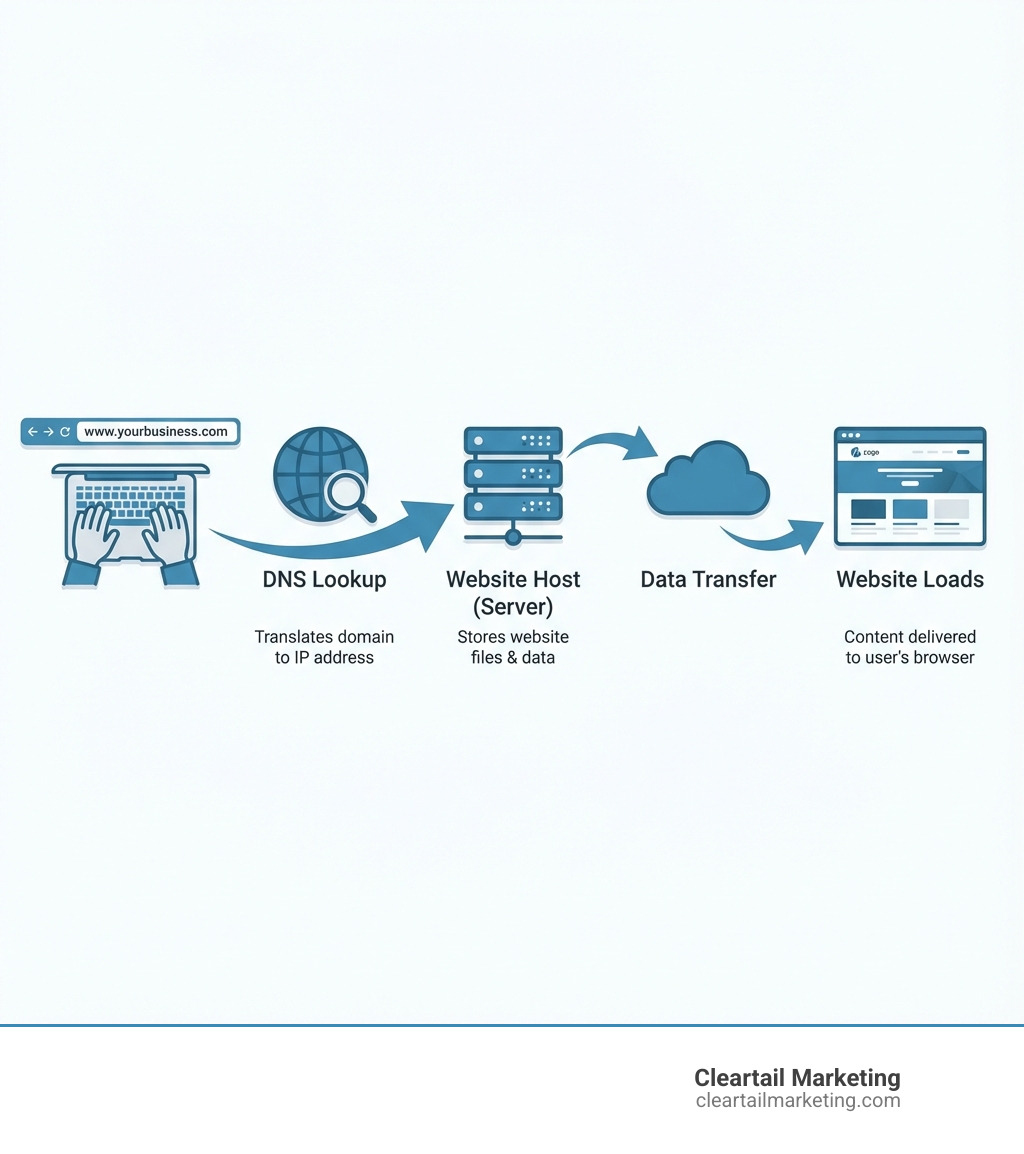
Website hosting for small business is the digital space you rent on a server to make your website accessible to customers 24/7. Think of it as renting a storefront—but instead of physical space on Main Street, you’re renting space on the internet.
Quick Answer: What You Need to Know
- What it is: Renting server space to store your website files and make them accessible online.
- Why you need it: Establishes legitimacy, enables 24/7 customer access, and breaks geographical barriers.
- Cost: Basic plans start at $2-$3/month for shared hosting.
- Key features: Look for 99.9% uptime, a free SSL certificate, 24/7 support, and easy scalability.
- Best starter option: Shared hosting is the most affordable and beginner-friendly choice for new small businesses.
A website is a hallmark of legitimacy. If customers can’t find you online, it raises doubts about your trustworthiness. With over 2 million businesses already using hosting and 53% of users abandoning a page that takes longer than three seconds to load, a professional online presence is non-negotiable.
Your website is a 24/7 salesperson, showcasing products, building your brand, and generating leads. But none of this happens without reliable hosting.
The hosting you choose directly impacts:
- Speed: How fast your pages load (critical for keeping visitors).
- Security: Protection for your business and customer data.
- Uptime: Whether customers can access your site when they need it.
- Scalability: Your ability to grow without starting over.
I’m Magee Clegg, founder and CEO of Cleartail Marketing, and I’ve helped over 90 B2B companies grow their online presence since 2014, including guiding businesses through choosing website hosting for small business that scales with their growth. Understanding hosting options is often the first real challenge businesses face when building their digital foundation.
Decoding the Lingo: Types of Web Hosting Explained
If you’re new to website hosting for small business, the terminology can feel like a new language. Just as there are different types of commercial properties, there are various types of web hosting, each suited for different business needs and budgets.
Shared Hosting
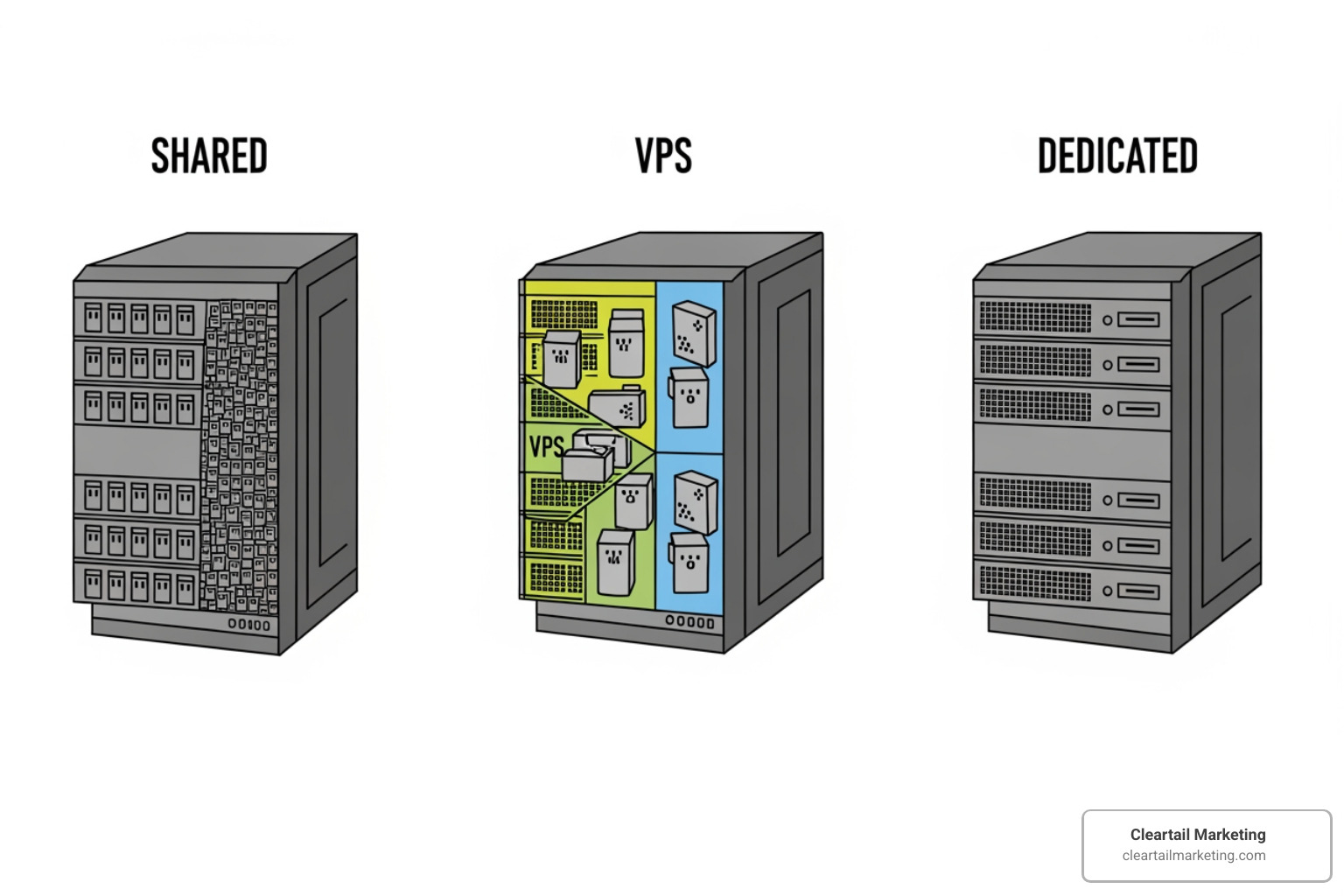
Think of shared hosting as an apartment building where many websites share space on a single server. It’s the most affordable and beginner-friendly option, making it popular for startups and sites with lower traffic. The upside is its low cost and ease of use. The downside is that shared resources mean a traffic surge on another site can slow yours down. Still, it’s a smart starting point for new businesses.
VPS (Virtual Private Server) Hosting
VPS hosting is like upgrading to a townhouse. You still share a physical server, but it’s partitioned into isolated virtual environments. This gives you guaranteed resources (memory, processor power) and more control than shared hosting. VPS is suitable for growing businesses that need better performance without the cost of a dedicated machine.
Dedicated Hosting
Dedicated hosting is like owning a private house—you get an entire physical server to yourself. This provides maximum control, performance, and security. It’s ideal for high-traffic websites, large e-commerce stores, or businesses with specific compliance needs. While it’s the most expensive option, it offers unparalleled speed and reliability.
Cloud Hosting
Cloud hosting offers ultimate flexibility and scalability. Your site is hosted on a network of interconnected servers, so if one fails, others pick up the slack. This structure is perfect for handling sudden traffic spikes, as resources can be allocated instantly. You typically pay only for what you use, making it cost-effective for businesses with fluctuating traffic.
Managed WordPress vs. Standard Hosting
WordPress is the most popular tool for creating websites. When it comes to hosting for it, you have two main flavors: standard and managed.
- Standard WordPress Hosting: This is typically shared hosting optimized for WordPress. You get the server space but are responsible for technical upkeep like updates, backups, and security. It’s budget-friendly but requires more hands-on work.
- Managed WordPress Hosting: This is a concierge service for your site. The host handles all technical aspects: automatic updates, daily backups, robust security, and performance optimization. Providers like Hostinger, Bluehost, and SiteGround offer excellent managed solutions.
Is managed WordPress hosting worth it? Absolutely. While it costs more ($10-$20/month vs. $2-$3 for basic shared), the time saved on technical tasks and the peace of mind from better security are invaluable. It lets you focus on your business, not backend settings. For most small business owners, the benefits are clear.
The Ultimate Checklist: Key Features of Website Hosting for Small Business
Choosing the right website hosting for small business isn’t just about picking the cheapest option. It’s about finding a reliable partner with the essential features to ensure your online presence thrives. My heart sank when I woke up one day and found my site down… again. That was my wake-up call! It showed me the true cost of unreliable hosting. Reliable hosting is the engine behind every fast, secure, and trustworthy website.
Here’s our ultimate checklist of what to look for:

Speed & Performance: The Need for Speed
With 53% of users abandoning a page that takes longer than three seconds to load, speed is a necessity. Your website should load in two seconds or less. Great hosting helps with:
- NVMe & SSD Storage: These modern drives are much faster than old HDD storage, significantly boosting website load speeds. Many top hosts like HostPapa and Hostinger offer them.
- LiteSpeed Servers: These servers are known for high performance and handling heavy traffic efficiently.
- Content Delivery Network (CDN): A CDN stores copies of your site on servers worldwide, delivering content from the closest location to your visitor. This drastically reduces load times. Many hosts include CDN integration.
- 99.9% Uptime Guarantee: This is non-negotiable. Your site must be accessible when customers visit. Look for hosts that guarantee at least 99.9% uptime.
- Gzip Compression: This tool shrinks your site’s files, making them load faster. It can reduce file sizes by nearly 70%.
- Image Optimization: Ensure your host supports modern, fast-loading image formats like WebP.
Essential Security Features for Your Small Business Website Hosting
Website security protects your data, your customers’ data, and your reputation. Look for hosts that act like a fortress for your website.
- Free SSL Certificate: An SSL certificate encrypts data between your site and visitors, which is crucial for security and SEO. Google penalizes sites without one. Most reputable hosts include a free SSL certificate.
- Malware Scanning & Removal: Automatic scanning and removal services are vital to detect and neutralize threats before they cause damage.
- WAF & DDoS Protection: A Web Application Firewall (WAF) and DDoS protection block malicious traffic and attacks, acting as your website’s bouncer.
- Automatic Backups: Regular, automatic backups are your safety net. Daily backups stored in multiple locations are ideal.
- Domain Privacy: This service protects your personal information from being listed publicly in the WHOIS database when you register a domain.
- CloudLinux: In shared hosting, this technology isolates websites, so a problem on one site doesn’t affect others on the same server.
Support & Scalability: A Host That Grows With You
Your business will grow, and your hosting should scale with it. When things go wrong, you also need reliable help.
- 24/7/365 Support: You need access to expert help anytime. Look for providers offering 24/7 support via phone, live chat, and email. HostPapa’s PapaSquad is a great example of dedicated support.
- Free Website Migration: Moving an existing site can be daunting. Many hosts, like Hostinger and DreamHost, offer free migration services to ensure a seamless transition with no downtime.
- Seamless Upgrade Paths: As your traffic grows, you should be able to upgrade your plan easily. Good providers offer flexible plans that allow you to scale up as needed.
Understanding the Cost of Website Hosting for Small Business
How much does website hosting for small business actually cost?
- Average Cost: Basic shared hosting plans typically start at $2-$3 per month.
- Managed WordPress: For the convenience of managed hosting, expect to pay around $10-$20 per month.
- Introductory vs. Renewal Pricing: Be aware of pricing structures. Many hosts offer low introductory rates that increase upon renewal. Always check the long-term cost.
- Free Domain & SSL: Most hosts include a free domain for the first year and a free SSL certificate, saving you money upfront.
- Money-Back Guarantee: A good host stands by its service. Look for at least a 30-day money-back guarantee, which allows you to try the service risk-free. DreamHost notably offers a 97-day guarantee.
How to Choose the Right Hosting Provider for Your Business
Choosing the right website hosting for small business can feel overwhelming, but it’s simpler when you have a clear understanding of your needs.
Assess Your Needs Before You Shop
Before looking at providers, ask yourself these questions:
- What’s your traffic volume? A new blog won’t need the same resources as a busy e-commerce site. Some plans are rated for specific monthly visit counts.
- Are you running an e-commerce store? Online stores require improved security, speed, and dedicated resources.
- What’s your technical skill level? Do you prefer a hands-off, managed solution or are you comfortable with backend tasks?
- What’s your budget? Remember to factor in renewal pricing, not just the introductory offer.
- What are your website goals? Is it a simple brochure site, a lead generation tool, or a full online store?
Comparing Top Providers
While we at Cleartail Marketing can provide expert guidance for your specific situation, here’s a general overview of top contenders and what to look for:
- Reliability: Look for a proven track record of 99.9% uptime.
- Support: 24/7/365 support is crucial. HostPapa’s PapaSquad is a great example.
- Security: Ensure robust features like free SSL, malware scanning, and automatic backups.
- Scalability: Choose a host that can grow with you through easy upgrade paths.
- Value: Compare features against the price, especially renewal rates.
A few standout providers from our research:
- Hostinger: Known for affordable plans, NVMe storage, and a user-friendly control panel.
- Bluehost: Offers strong security features, a free domain, and is recommended by WordPress.org.
- SiteGround: Praised for performance, AI security, and using Google Cloud infrastructure.
- DreamHost: Provides generous storage, a free domain, and an impressive 97-day money-back guarantee.
- HostGator: Features affordable plans, a user-friendly cPanel, and NVMe drives.
- GreenGeeks: An eco-friendly choice that offsets its power usage with renewable energy.
- HostPapa: A Canadian provider with NVMe storage, CloudLinux security, and award-winning support.
- OVHcloud: Offers affordable plans with 1-click CMS installation for growing businesses.
- Namecheap: A user-focused provider with a strong emphasis on privacy and free migration.
The Role of a Domain Name in Your Hosting Plan
Your domain name is your website’s address (e.g., yourbusiness.com) and is key for branding.
- Choosing Your Domain: Aim for something memorable, easy to spell, and related to your business name.
- Free Domain Offers: Many hosting providers, including HostPapa, Bluehost, and DreamHost, offer a free domain name for the first year with a hosting plan.
- Domain Transfer Process: If you already own a domain, most hosts offer free and easy transfer services.
- Bundling: A custom email address (like [email protected]) bundled with your domain boosts professional credibility.
Special Considerations: Local and Eco-Friendly Hosting
Local or ethical considerations can also play a role in your choice.
- Local Hosting Options: For businesses targeting a local audience, a local provider can be beneficial. Canadian businesses might consider Canadian Web Hosting or the proudly Canadian-owned HostPapa, which can offer faster load times for local users and local support.
- Eco-Friendly Hosting: For businesses committed to sustainability, GreenGeeks is a standout. It offsets three times its power usage with renewable energy, reducing your carbon footprint.
Frequently Asked Questions About Small Business Hosting
We often get asked similar questions about website hosting for small business. Here are some of the most common ones, answered directly.
What are the signs I need to upgrade my current web hosting plan?
It’s a great problem to have when your business outgrows its hosting. Here are the clear signs it’s time to upgrade:
- Slow Website Performance: If your site is constantly lagging or timing out, your hosting probably can’t handle the traffic or content. 53% of users leave if a page takes longer than three seconds to load.
- Frequent Downtime: An unavailable website kills growth and customer trust. This is a critical sign of an inadequate hosting plan.
- Running Out of Resources: If you receive warnings from your host about nearing your storage or bandwidth limits, it’s time for a bigger plan.
- Traffic Spikes Cause Crashes: If your site struggles during peak traffic times (like a sale or viral post), your hosting isn’t scalable enough.
- Needing More Control: As your business evolves, you might need advanced security or the ability to install specific software not allowed on a shared plan.
How can I transfer my existing website to a new hosting provider?
Switching hosts seems intimidating, but it’s usually a straightforward process.
- Use Free Migration Services: Many top providers, including Hostinger, DreamHost, and HostGator, offer free website migration. Their experts handle the technical work for you.
- Always Backup Your Site First: Before starting a transfer, perform a full backup of your website’s files and database as a safety net.
- Follow Provider Guidance: Your new host’s support team will guide you through the process, aiming for a seamless transition with minimal downtime.
- Transfer Your Domain: You will also need to either transfer your domain registration to the new host or update its DNS settings to point to the new server.
Is managed WordPress hosting worth it for a small business?
For most small businesses, yes, managed WordPress hosting is absolutely worth it. While it costs more than basic shared hosting (around $10-$20 per month), the benefits are significant:
- Time-Saving: The host handles all technical backend tasks like updates, backups, and security monitoring. This frees you up to focus on running your business.
- Improved Security & Performance: These plans include robust security measures and are fine-tuned for WordPress, ensuring faster load times and better protection against threats.
The peace of mind, improved site performance, and time saved on maintenance far outweigh the additional cost for most business owners. It allows you to focus on growth rather than getting bogged down in technical details.
Conclusion: Building a Strong Foundation for Your Online Success
Choosing the right website hosting for small business is more than a technical detail; it’s a critical investment in your company’s future. Your hosting provider is the backbone of your online presence, directly impacting your site’s speed, security, and your ability to attract and retain customers.
The foundation you lay today determines how smoothly your digital storefront operates tomorrow. By understanding hosting types, prioritizing key features, and selecting a provider that aligns with your growth, you empower your business to thrive online. Your hosting should provide room to scale as your business flourishes.
At Cleartail Marketing, we specialize in guiding businesses through these crucial decisions, offering expertise in everything from website design and SEO to choosing the perfect website hosting for small business. We’re dedicated to building strong client relationships and delivering proven results.
Ready to compare your options? Check out our complete website hosting comparison guide.
