



WHY INTERNET MARKETING ATTORNEYS ARE ESSENTIAL FOR LAW FIRM GROWTH
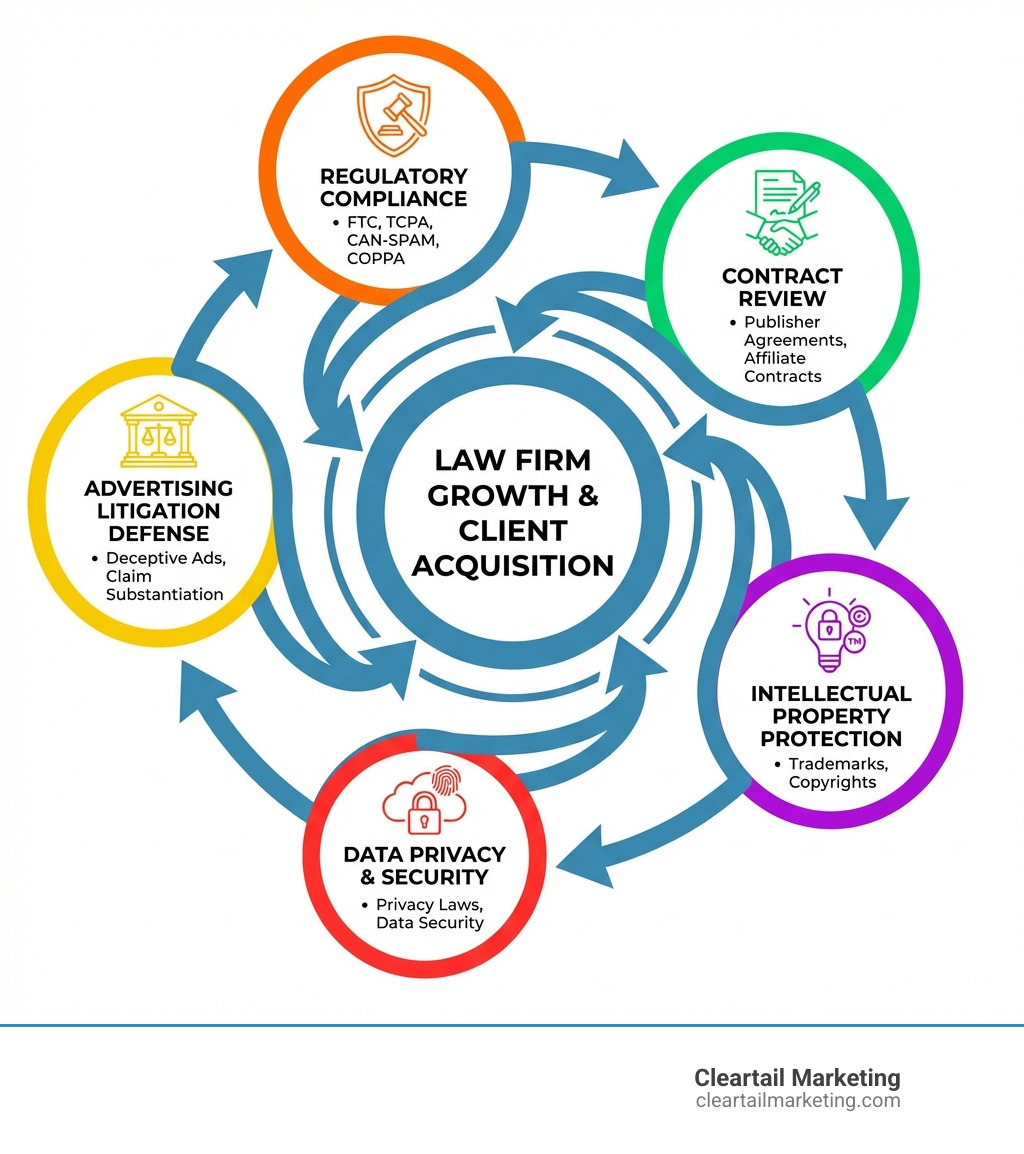
An internet marketing attorney specializes in helping law firms and digital marketers steer the complex legal landscape of online advertising, ensuring compliance with regulations like FTC guidelines, TCPA, CAN-SPAM, and COPPA while protecting intellectual property and managing contracts. These specialized attorneys address:
- Regulatory Compliance: Navigating FTC investigations, state Attorney General inquiries, and digital advertising regulations
- Contract Protection: Drafting and reviewing publisher agreements, advertiser insertion orders, and affiliate marketing contracts
- Intellectual Property: Protecting trademarks, copyrights, and online content from infringement
- Data Privacy: Ensuring compliance with privacy laws and data security requirements
- Advertising Defense: Representing clients in deceptive advertising litigation and claim substantiation proceedings
- Risk Management: Preventing fee disputes, click-fraud issues, and breach of contract claims
The legal space is more competitive than ever. If someone needs legal help today, they’re starting with a search engine. But showing up in search results isn’t enough—you need to ensure your marketing efforts comply with strict professional conduct rules while effectively attracting clients.
Law firms face unique challenges in digital marketing. A revenue:cost ratio of 5:1 is generally thought to be acceptable for marketing spend, with some high-value practice areas like mesothelioma lawsuits justifying costs of hundreds of dollars per ad click. Yet many firms struggle to track their cost per acquisition (CPA) or measure whether their marketing investments actually generate returns.
Beyond the numbers, there are serious legal risks. Violating Law Society marketing rules, creating unintentional client-lawyer relationships through social media, or accidentally disclosing confidential information online can tank a practice faster than a bad review. With 97% of people checking online reviews before contacting a business, your digital presence directly impacts your bottom line.
As Magee Clegg, founder and CEO of Cleartail Marketing, I’ve helped over 90 law firms steer these challenges since 2014, including one client whose revenue increased 278% in 12 months by combining strategic internet marketing with proper legal safeguards. Understanding when you need an internet marketing attorney versus a digital marketing agency—or better yet, how both work together—can make the difference between sustainable growth and costly legal exposure.
The Role of an Internet Marketing Attorney in Modern Practice
In today’s digital world, a law firm’s online presence is no longer just a luxury; it’s a necessity. But with great opportunity comes great responsibility—and significant legal complexity. This is where an internet marketing attorney steps in, acting as your firm’s legal compass in the digital wilderness. They address a myriad of specific legal challenges that arise from online promotional activities, ensuring your firm can grow without inadvertently stepping into a legal minefield.
These legal professionals offer crucial guidance on a broad spectrum of issues, from the nuances of online advertising content to the intricate details of data privacy. They provide legal counsel for digital agencies, web publishers, marketing affiliates, advertisers, and online businesses, helping them craft effective digital marketing campaigns that comply with all applicable regulations. This proactive approach helps avoid costly penalties and litigation down the road. For more information on how we can help with your firm’s online presence, explore our insights on law firm web marketing.
Why You Need an Internet Marketing Attorney for Contract Review
One of the foundational services an internet marketing attorney provides is contract drafting and review in the digital marketing space. Why is this so vital? Generic templates simply won’t cut it. Using them risks leaving money on the table or jeopardizing your entire business with an unenforceable or unlawful agreement. An experienced attorney will review and draft critical documents such as:
- Publisher and Advertiser Insertion Orders: These define the terms between advertisers and publishers regarding ad placements, pricing, and performance.
- Advertising Media Buys: Contracts for purchasing advertising space or time across various digital channels.
- Affiliate Marketing Agreements: Clearly outlining the responsibilities, compensation, and compliance requirements for affiliate partners.
- Service Agreements: For digital marketing agencies, SEO consultants, or web developers.
Without precise, legally sound contracts, firms can face a litany of problems, including fee disputes, allegations of click-fraud, indemnity issues, and outright breach of contract claims. An internet marketing attorney ensures these agreements are ironclad, protecting your interests and minimizing potential liabilities. Our expertise extends to helping you develop custom law firm websites that integrate these legal safeguards.
Navigating Intellectual Property and Branding
Your firm’s online content and brand identity are valuable assets that require diligent protection. An internet marketing attorney plays a critical role in intellectual property (IP) matters related to online content and branding. This includes:
- Trademark Protection: Ensuring your firm’s name, logo, and slogans are properly trademarked and defended against infringement online.
- Copyright Law: Protecting your website content, articles, videos, and other digital assets from unauthorized use.
- Online Content Licensing: Assisting with agreements for using third-party content or licensing your own content to others.
- Domain Name Disputes: Handling issues like cybersquatting or unauthorized use of domain names similar to your firm’s.
They advise on copyright law, posting photos, setting up links, and generally safeguarding your digital footprint. When content is king, but also easily copied, protecting your unique voice and visual identity is paramount. We help ensure your SEO content writing strategy aligns with IP protection best practices.
Navigating Regulatory Compliance: FTC, TCPA, and Beyond
The internet marketing landscape is a regulatory minefield, with laws and guidelines constantly evolving. An internet marketing attorney is your indispensable guide through this complex terrain, ensuring your firm’s marketing efforts don’t fall afoul of powerful regulatory bodies.
They help clients steer key regulations and laws such as:
- FTC (Federal Trade Commission): The FTC is a government watchdog monitoring unfair and deceptive marketing tactics. An attorney ensures your advertising claims are substantiated and disclosures are clear, preventing violations of Section 5 of the FTC Act.
- TCPA (Telephone Consumer Protection Act): This law governs telemarketing calls, faxes, and text messages. Compliance involves obtaining proper consent, adhering to Do Not Call registries, and respecting call time restrictions.
- CAN-SPAM Act: This act sets rules for commercial email, requiring accurate header information, clear identification as an advertisement, and a functional unsubscribe mechanism.
- COPPA (Children’s Online Privacy Protection Act): Protects the online privacy of children under 13, setting strict rules for collecting personal information from them.
- ROSCA (Restore Online Shopper’s Confidence Act): Addresses negative option marketing and automatic renewals, requiring clear disclosures and affirmative consent.
- State Laws: Many states have their own consumer protection and privacy laws (like CalOPPA or the CCPA in California) that add layers of compliance.
An attorney ensures that from web-based advertising and social media communications to email and text marketing campaigns, every step is compliant. For a glimpse into the broader implications of tech regulations, consider reports like those from BBC News on tech regulations.

How an Internet Marketing Attorney Manages Advertising Litigation
When marketing efforts go awry, or when a competitor cries foul, an internet marketing attorney is crucial for managing advertising and marketing litigation. They represent clients in disputes involving allegations of false advertising, unfair trade practices, and other deceptive marketing claims.
This often involves:
- FTC and State Attorneys General Investigations (CIDs): These can be high-stakes affairs. An attorney’s ability to anticipate regulatory maneuvers and expose weaknesses in investigations can be the difference between a closed case and a hefty penalty. Richard B. Newman, a distinguished internet marketing attorney, has successfully convinced the FTC to drop investigations and negotiated settlements where marketers paid only a small fraction of alleged damages.
- Disgorgement Claims: Regulatory bodies often seek disgorgement of profits obtained through alleged illegal activities. An attorney challenges the authority and scope of such demands, as seen in Supreme Court cases limiting the FTC’s disgorgement remedy.
- Lanham Act Claims: These federal laws govern trademark infringement and false advertising, often leading to complex commercial litigation between businesses.
Having an attorney who understands the intricacies of these cases, and who can aggressively advocate for your interests, is paramount. You can find further insights into this specialized field through resources like National Law Review insights.
Compliance for Pay-for-Performance and Affiliate Marketing
Pay-for-performance (PFP) and affiliate marketing techniques offer immense opportunities for digital growth, but they also come with unique legal complexities. An internet marketing attorney provides crucial advice on:
- Lead Generation Compliance: Ensuring that leads are generated ethically and legally, adhering to regulations like TCPA for phone calls and CAN-SPAM for emails.
- Affiliate Network Oversight: Advising on the legal responsibilities of advertisers for the actions of their affiliates. The FTC can sue businesses based on the actions of their affiliates, making clear contracts and safeguard policies essential.
- Disclosure Requirements: Ensuring that all advertisements, especially those involving influencers or endorsements, clearly disclose the material connection between the endorser and the advertiser, as per FTC Endorsement Guides.
- Contractual Safeguards: Drafting robust affiliate and performance marketing agreements that define terms, compliance obligations, and liability, protecting against issues like click-fraud or deceptive practices by partners.
These attorneys help affiliate networks and advertisers understand their responsibilities and leverage opportunities while minimizing the potential for liability, fraud, and collections issues. For more on this, check out our services for pay-per-click marketing.
Financial Metrics and ROI: The Business Side of Legal Marketing
Understanding the legal landscape is one thing, but making sure your digital marketing efforts actually make financial sense is another. An internet marketing attorney often works hand-in-hand with marketing strategists to ensure your spend is not just compliant, but profitable.
A common benchmark in marketing is a revenue:cost ratio of 5:1, meaning for every dollar spent on marketing, you should ideally generate five dollars in revenue. This is a general thought to be acceptable for marketing spend, including law firm internet marketing. To achieve this, understanding your Cost Per Acquisition (CPA) and its relationship to case value is critical.
This isn’t just about throwing money at ads; it’s about strategic investment. For a law firm, every marketing dollar should be viewed as an investment in future cases. We can help you steer the complexities of increasing your website traffic effectively, which is key to improving these metrics. Learn how to drive more traffic to your website.
Understanding the Revenue:Cost Ratio in Law Firm Growth
The “revenue:cost ratio” is a crucial metric, especially for law firms. While a 5:1 ratio is a good general benchmark, the acceptable CPA for a law firm can vary wildly depending on the average value of a case. For instance, search engine marketing terms for mesothelioma lawsuits can cost hundreds of dollars per ad click. This seems astronomical, right? However, if the average settlement for a mesothelioma case can exceed $1 million, a high CPA may still result in an excellent ROI.
The key insight here is that the average CPA should ideally be about 1/5 of the average value of each case. So, if your average case value is $100,000, you can potentially afford a CPA of up to $20,000 and still meet that 5:1 ratio. This means high-value cases can justify significant marketing spend, provided you have accurate tracking. An internet marketing attorney can help ensure that your marketing agreements reflect these performance metrics and protect your interests in pay-for-performance models. Dig deeper into this concept with our guide to Google CPA explained.
Measuring Success with an Internet Marketing Attorney
How do law firms truly measure the success of their digital marketing campaigns? It goes beyond just clicks. An internet marketing attorney works with firms to understand the legal implications of performance metrics and data usage, while we, as digital marketers, focus on the technical tracking.
Key metrics for success include:
- Cost Per Customer Acquisition (CPA): Tracking how much it costs to bring in a new client. This requires robust marketing tools that accurately attribute leads to specific campaigns.
- Conversion Rates: The percentage of website visitors who take a desired action, such as filling out a contact form or calling the firm.
- Lead Quality: Not all leads are created equal. Marketing should attract “hot leads” actively seeking legal help, rather than just general inquiries.
- Website Visitors per Month: A basic indicator of online visibility and brand awareness.
- Social Media Engagement: Likes, comments, and shares can indicate brand familiarity and trust.
To effectively advise on these metrics, attorneys need to understand how marketing tools track CPA and how practice management software tracks the average value of a case. This holistic view ensures that digital marketing isn’t just generating traffic, but generating profitable, compliant clients. Measuring the full picture of your marketing campaign ROI is essential for sustained growth.
Protecting Your Firm: Ethics, Data Privacy, and Reputation
For law firms, digital marketing isn’t just about attracting clients; it’s about doing so ethically, protecting sensitive data, and maintaining an unimpeachable professional reputation. These are areas where an internet marketing attorney provides indispensable guidance.
The legal profession operates under strict ethical guidelines, such as the Model Code of Professional Conduct (in Canada, developed by the Federation of Law Societies) and specific jurisdictional rules. These codes often dictate what lawyers can and cannot say in advertising, how they handle client testimonials, and even how they interact on social media. A mishandled online presence can open doors to scrutiny or, worse, close them entirely.
Attorneys also play a crucial role in ensuring compliance with data privacy and security laws. This involves advising on legal and regulatory requirements for customer and employee data collection, use, storage, transmission, disclosure, and disposal. They help establish proper protocols, draft customized data management policies, and ensure compliance with U.S. and international data security and privacy requirements. This safeguards client confidentiality and avoids costly data breaches. You can learn more about the broader context of legal ethics in a digital context. Proactive online reputation management is also a critical component.
Managing Online Reputation and Defamation Issues
In today’s interconnected world, your firm’s online reputation is constantly under scrutiny. With 97% of people checking online reviews and 90% admitting they are influenced by them, managing your online narrative is paramount. An internet marketing attorney helps clients manage their online reputation and address potential defamation issues by:
- Review Management: Advising on how to ethically respond to negative reviews and how to encourage positive ones without violating professional conduct rules. They can also help firms understand their rights regarding fake or malicious reviews.
- Defamation and Cyberbullying: Pursuing legal action against individuals or entities that publish false, damaging statements about your firm or its attorneys online. This might involve sending cease-and-desist letters or filing lawsuits.
- Online Presence Control: Guiding firms on strategies to control search engine results for their names and brand, ensuring positive and accurate information is prominent. This includes owning personal .com domains and optimizing social media profiles.
- Social Media Ethics: Advising on appropriate conduct on social media platforms to prevent unintended professional conflicts or damage to reputation.
When a client needs to fix bad reviews, having legal counsel ensures all actions are compliant and effective.
Avoiding Unintentional Client-Lawyer Relationships
Digital marketing, particularly social media, can inadvertently create ethical pitfalls for lawyers. A seemingly innocent interaction online can be misconstrued, potentially leading to an unintentional client-lawyer relationship, which carries significant professional responsibilities and risks. An internet marketing attorney advises on how to prevent these scenarios:
- Clear Disclaimers: Ensuring all digital platforms (websites, social media profiles, blogs) prominently feature disclaimers stating that online interactions do not constitute legal advice or create an attorney-client relationship.
- Social Media Engagement Guidelines: Providing rules for how attorneys should interact on social media to avoid offering specific legal advice or giving the impression of retention. Even “liking” or “following” potential clients can create impressions.
- Confidentiality Safeguards: Educating attorneys on the risks of discussing legal issues or commenting on ongoing cases online, which could inadvertently disclose confidential information or blur personal and professional lines.
- Anti-Spam Legislation Compliance: For Canadian firms, adherence to Canada’s anti-spam legislation is crucial. This requires all commercial electronic messages to include sender information and a clear unsubscribe option, protecting against unsolicited communications that could raise ethical concerns.
The goal is to educate and inform, not to advise on specific legal matters without a formal retainer.
Strategic Growth: Integrating Legal Counsel with Digital Marketing
For law firms aiming for strategic growth, integrating legal counsel with digital marketing efforts is not optional—it’s essential. An internet marketing attorney and a skilled digital marketing agency form a powerful duo, ensuring that every online initiative is both effective and compliant. We, at Cleartail Marketing, understand this synergy.
Our digital marketing strategies for law firms encompass:
- SEO (Search Engine Optimization): Helping your firm appear prominently in search results for relevant legal terms. This includes local SEO, technical SEO, on-page optimization, and link building.
- PPC (Pay-Per-Click) Advertising: Running targeted ad campaigns on platforms like Google Ads to capture high-intent leads.
- Social Media Marketing: Building brand awareness and engaging with potential clients on platforms where they spend their time.
- Content Marketing: Creating valuable, informative legal content (blogs, articles, videos) that educates potential clients and establishes your firm as an authority.
This integrated approach aims to build a robust online presence that attracts quality leads, improves credibility, and ultimately drives client acquisition. We focus on delivering best attorney web design that is not only visually appealing but also strategically optimized for legal compliance and client conversion.
Building Credibility and Trust Online
In the legal field, credibility and trust are paramount. Digital marketing, when done correctly, can significantly improve these attributes. An internet marketing attorney helps ensure that your online efforts genuinely build trust, rather than erode it through non-compliance.
Strategies include:
- Third-Party Validation & Peer Recognition: Leveraging elite recognition and peer-driven rankings (like Best Lawyers) to improve credibility. These platforms offer SEO-enhancing backlinks and premium profiles that signal authority.
- Thought Leadership: Consistently publishing high-quality, informative content (blogs, articles, legal insights) positions your attorneys as experts in their field. An attorney ensures this content is accurate, verifiable, and doesn’t cross ethical lines.
- Online Reviews and Testimonials: Actively managing and promoting positive client reviews, while ethically addressing negative ones. Video testimonials from satisfied clients can be particularly powerful in building trust.
- Professional Online Presence: Maintaining a consistent, professional brand identity across all digital channels, from your website to social media profiles.
All these elements contribute to building brand trust in the digital sphere, which is crucial for attracting and retaining clients.
Common Marketing Mistakes Law Firms Must Avoid
Even with the best intentions, law firms can stumble in their digital marketing efforts. An internet marketing attorney helps identify and rectify common pitfalls that can lead to wasted resources, reputational damage, or even legal repercussions.
Here are some common mistakes and how legal counsel helps avoid them:
- Generic Websites: A “one-size-fits-all” website fails to communicate your firm’s unique value proposition or practice area expertise. An attorney ensures your website content is compliant while we focus on law firm web design that reflects your brand.
- Slow Response Times: Inquiries left unanswered or delayed can mean lost clients. A 24/7 lead response system is crucial. While a marketing agency handles the system, an attorney can advise on disclaimers for automated responses.
- Lack of Local SEO Strategy: For firms with a physical presence, neglecting local SEO means missing out on clients searching for “attorney near me.”
- Keyword Stuffing & Outdated Content: Google prioritizes quality, relevant content. Keyword stuffing is ineffective and can harm rankings. An attorney ensures content accuracy and compliance.
- One-Size-Fits-All Ads: Generic ad campaigns fail to resonate with specific client pain points. Targeted ads are more effective.
- Ethical Violations: This is perhaps the most critical. Violating Law Society rules, creating unintentional client-lawyer relationships, or disclosing confidential information online can have severe consequences. An internet marketing attorney provides the guardrails.
- Poor Data Privacy Practices: Failure to comply with data privacy laws can lead to fines and reputational damage.
Avoiding these mistakes requires a blend of astute marketing strategy and rigorous legal oversight.
Frequently Asked Questions about Internet Marketing Law
What is a generally acceptable revenue:cost ratio for law firm marketing?
A: For law firm marketing, a revenue:cost ratio of 5:1 is generally considered acceptable. This means that for every dollar your firm spends on marketing, you should aim to generate five dollars in revenue. This benchmark helps ensure that your marketing spend is not just an expense, but a profitable investment. It’s crucial to track your Cost Per Acquisition (CPA) and compare it to the average value of your cases to ensure you’re meeting this target.
How do attorneys help with TCPA and CAN-SPAM compliance?
A: Internet marketing attorneys help law firms and marketers steer TCPA (Telephone Consumer Protection Act) and CAN-SPAM Act compliance by providing legal guidance on appropriate communication practices. For TCPA, they advise on obtaining proper consent for telemarketing calls and text messages, adhering to “Do Not Call” registries, and respecting calling hour restrictions. For CAN-SPAM, they ensure commercial emails have accurate header information, clearly identify as advertisements, and include a simple, functional unsubscribe mechanism. They also help draft privacy policies and terms of service that reflect these compliance requirements, protecting firms from potential lawsuits or regulatory fines.
What are the risks of social media marketing for lawyers?
A: While social media offers great opportunities, it poses several risks for lawyers. These include:
- Violation of Professional Conduct Rules: State bar associations and Law Societies (like those governing the Model Code in Canada) have strict rules regarding lawyer advertising and solicitation.
- Unintentional Client-Lawyer Relationships: Answering specific questions or engaging in discussions online can inadvertently create the impression of an attorney-client relationship, leading to professional obligations without formal retainer.
- Disclosure of Confidential Information: Comments or posts about cases, even hypothetical ones, could accidentally reveal confidential client information.
- Blurring Personal and Professional Lines: Personal opinions on controversial topics can damage professional reputation or create conflicts of interest.
- Setting Unreasonable Expectations: Discussing past successes without clear disclaimers that “each case is different” can lead to clients having unrealistic expectations.
An internet marketing attorney guides firms on ethical social media engagement, ensuring disclaimers are in place, content is carefully reviewed, and professional boundaries are maintained.
Conclusion
Navigating the complex and changing world of digital marketing for law firms requires more than just a great marketing strategy; it demands astute legal oversight. An internet marketing attorney is not just a reactive problem-solver but a proactive partner, ensuring your firm’s online presence is both powerful and compliant.
At Cleartail Marketing, we understand this delicate balance. Our comprehensive digital marketing solutions, combined with the strategic guidance of an internet marketing attorney, provide your firm with the ultimate digital edge. We empower you to attract clients, build credibility, and achieve sustainable growth, all while safeguarding your professional integrity. Ready to secure your firm’s digital future? Learn more about Your Firm’s Digital Edge: Navigating the World of Attorney Web Marketing and let’s build your success story together.
